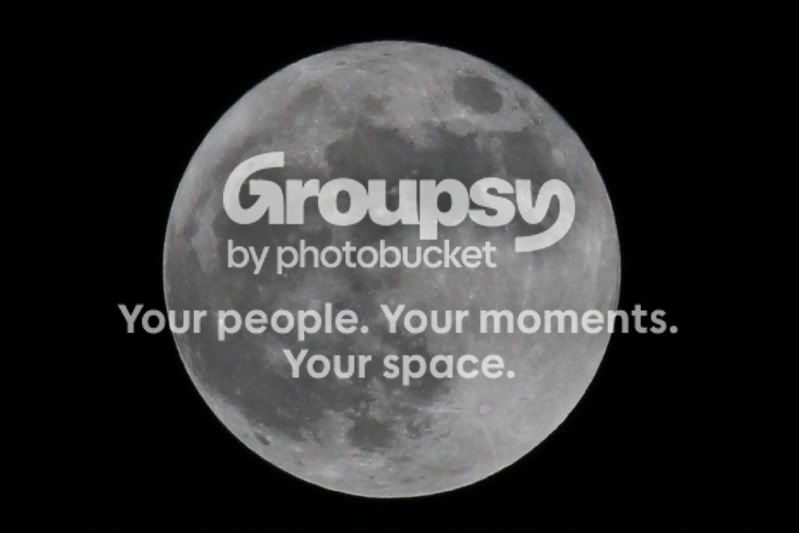
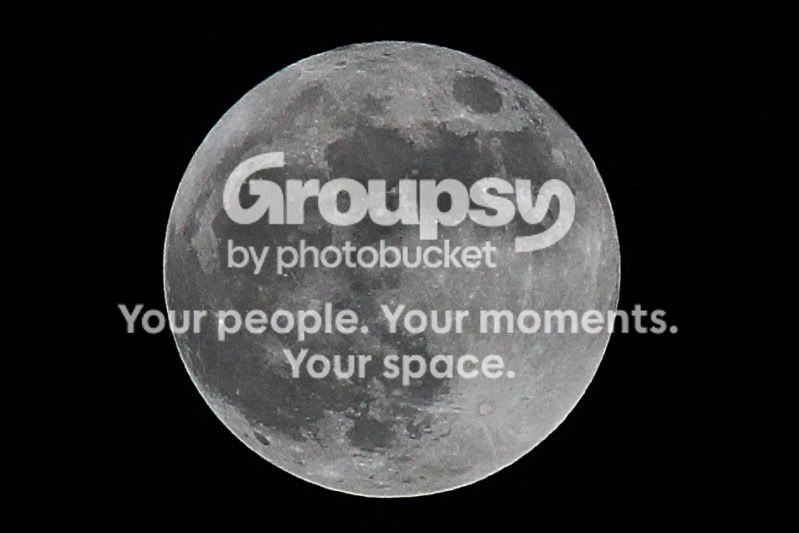
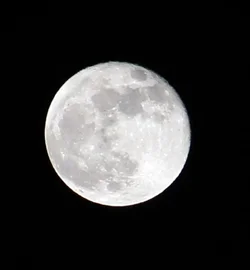
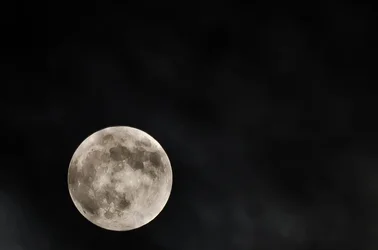
Hi to all... I sure was excited shooting the Super Moon... with my D90. Sure enough, never done it before. So I hit the web, forums, wiki... and most recomendations in between.
So even after almost 30 shots with different settings, I can not get passed the fuzzy white ball. No features... and defffinitly overexposed look. Here is range os settings I have tried:
Manual
Focus to infinity
F/16 or 11 or 8 (some 5.6)
ISO 1 or 200, 400
Shutter 1/125, 250-400
Pause 10 sec.
Menu/Custome Setting Menu/ (d)(Shooting/display)/ (d10) Exposure delay mode/on
Meetring 10
Please help.
Here is a link to all MOSTLY failed shots:
Flickr: sanelbabic's Photostream
Your image (DSC_0174) Has an iso speed of 400, an aperture of f/5.6 and an exposure time of 1/30, and appears over-exposed by one stop. In contrast, the previous image (DSC_0173) has similar settings except for an iso of 3200. That is three stops of exposure more than you ended up needing in the image DSC_0174.
When I shoot the moon, I ignore the meter and autofocus. If you have live-view, focus on the moon with the magnified live-view (which means VR should be off, and AF should be off), and set the exposure manually. I prefer to use the lowest ISO (100 in my case, 200 in yours), an f/stop which is the sharpest for your lens (usually 2 stops from wide open), and a shutter speed in the 1/30 to 1/125 sec. Then you examine the image if too dim, reduce your shutter speed and try again.
The histogram is usually useless because the moon makes up such a small part of the overall image (unless you are using a lens in the 1000mm range). But the basic rule is that if the details of the moon are washed out, reduce your exposure, and keep reducing it until you have the level of detail you want.
Of course, other things also help ensure a sharp image a solid tripod, mirror-lockup if you have it, a remote shutter, and a shutter-delay will all help to eliminate the camera shake vibrations that can blur the detail.
When you shoot the moon in context (ie, low on the horizon and you want to see the foreground), then timing is critical. The full moon occurs just when the sun sets, and the illumination level falls rapidly. At the same time, the moon tends to be dim when just on the horizon, due to the amount of atmosphere that the moon light has to go through. So the brightness difference (dynamic range) between the moon and the surroundings is low at the beginning. As the moon climbs upward, it becomes brighter (less atmosphere), and at the same time the landscape becomes darker (as the twilight progresses to night). So within minutes the brightness difference between the moon and the detail on earth become sufficiently strong as to exceed the dynamic range of the camera.
What this means is that if you want to shoot a "full" moon with foreground detail, it is best to do this one or two days BEFORE the actual full moon, as the moon will already be in the sky before the sun sets, and the dynamic range difference between the moon's brightness and the earth will be low. This is what TCampbell noted in another post.










![[No title]](/data/xfmg/thumbnail/37/37626-4a6ffc3f17ab3a8e97170fda3276640e.jpg?1734170750)