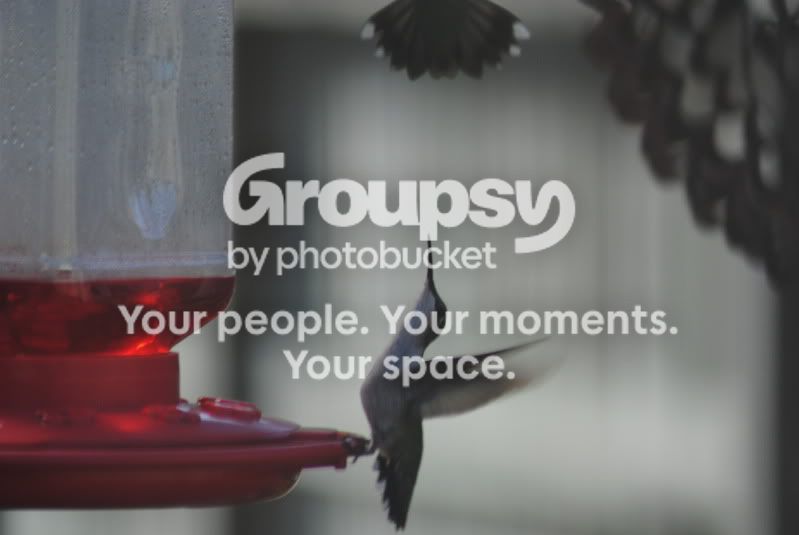
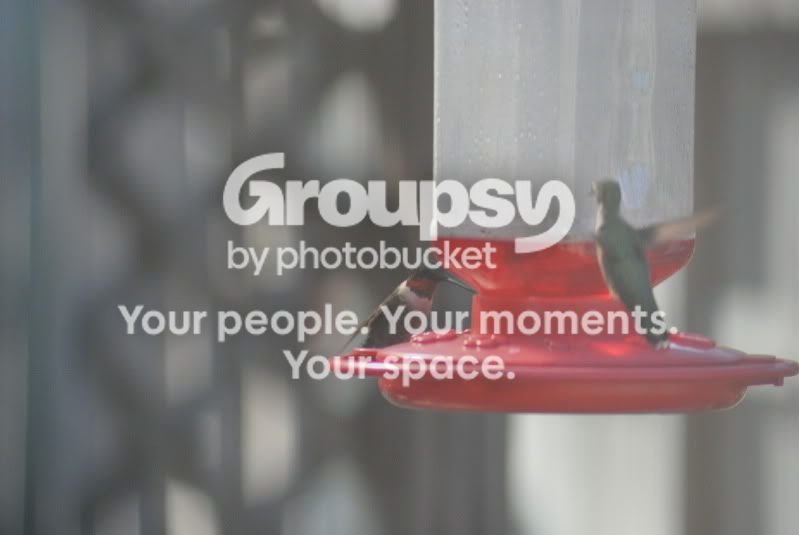
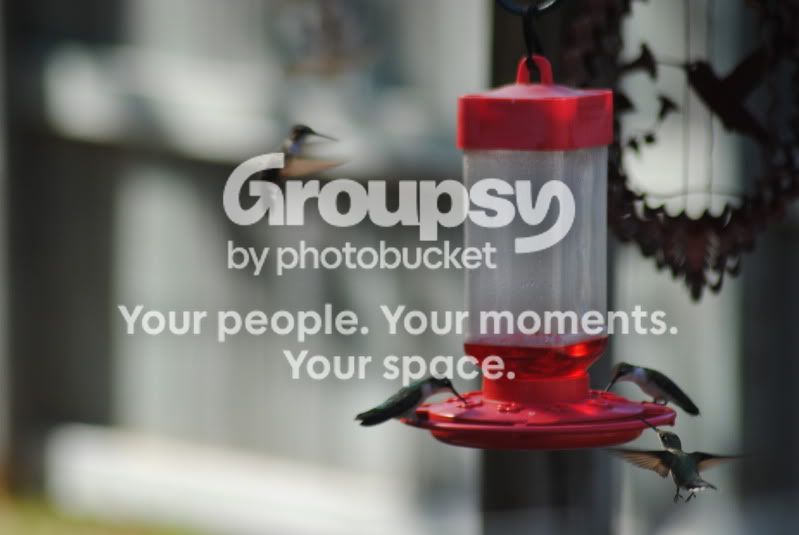
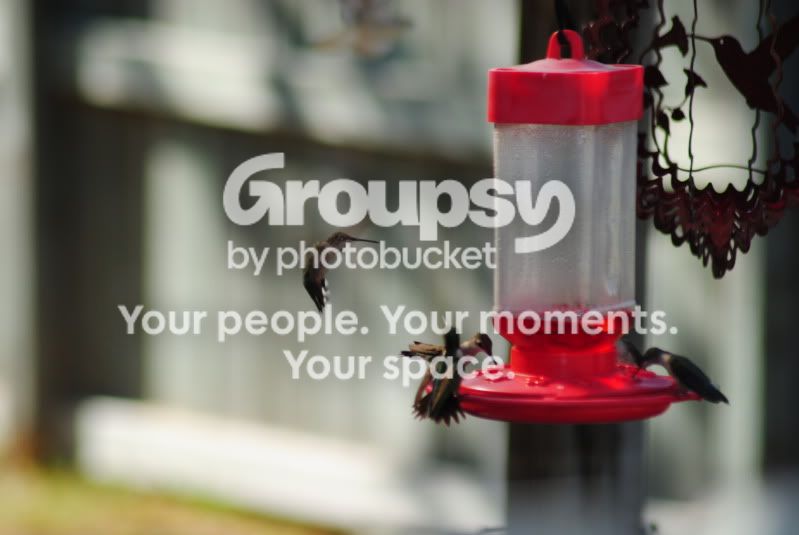
First thing I would recommend is move in closer, you can sit quietly or stand at a tripod about ten feet away. They will get used to you being there.
Study their behavior. They will move in to sip, move back for a split second and then move back in for a sip. Try to catch them in that millisecond when they move back.
Then you won't have the feeder in the frame

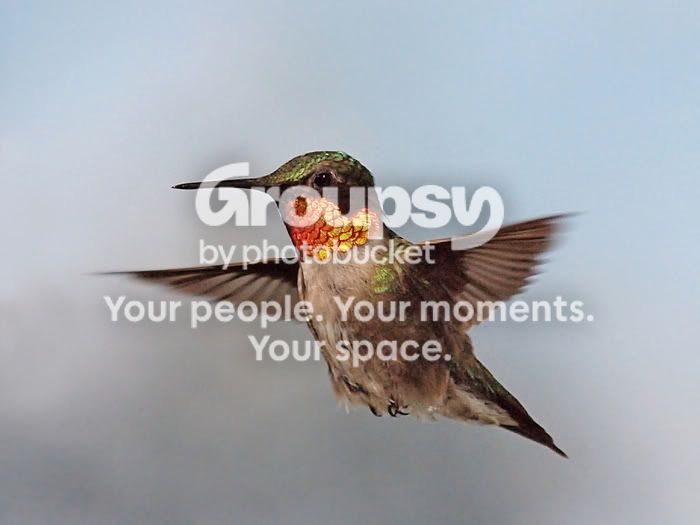
Light obviously is a big deal, plan your shoot with front light if possible. The right angle is especially important to capture the colorful gorget of the male.
Consider the background. If you can't position the feeder to eliminate distractions think about painting a pattern on a piece of foamcore and mounting it behind the feeder.
Wing blur is a matter of personal preference, I like to see some definition with a bit of blur. That translates to a shutter speed of 1/640 - 1/1000. Slower will work IF you catch them in that moment of hovering.
Since you are shooting just the bird, flowers, etc. are not an issue for DOF so you can shoot close to wide open. But you will have to nail the focus.
A remote shutter does work but you will have to manually focus on an area and hope a bird appears in that DOF. If you can block all but one feeding port you can then focus on that area...
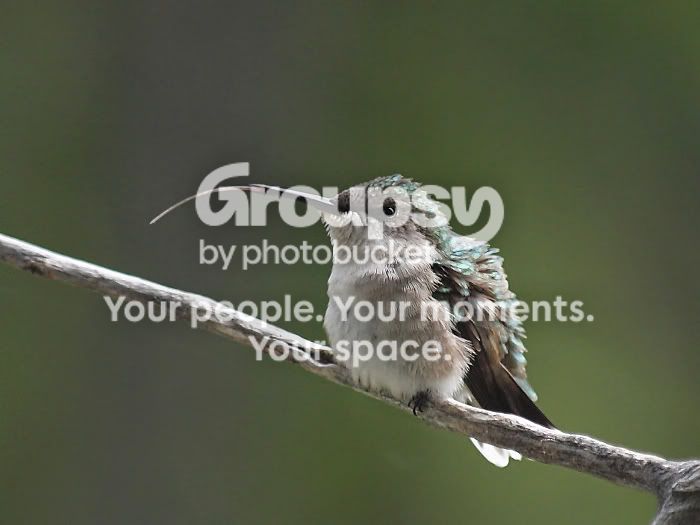
IMO a "good" hummer shot has the eye in focus with a highlight, a pose with the wings extended either to the front or back. Ideally the feet are visible, some spread on the tail feathers and a bit of tongue is nice
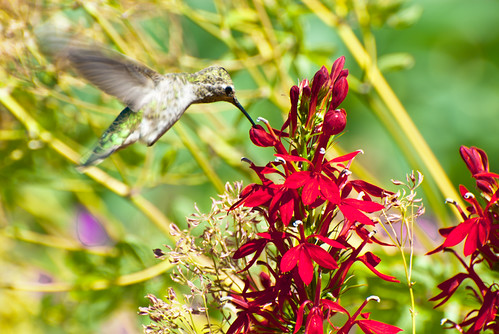
Here's three examples for you to judge the impact of the background.
This was shot with early morning front light, the background is trees about 40' away.
Early morning front light, mostly sky as background, trees were about 60' away.
Late afternoon front light, the background is my shop wall about 30' away.
Something else to consider is adding a natural branch close to the feeder, they will stage on the branch before moving in to feed and return to the branch to preen after feeding.
Hope this helps,
Cheers, Don