First, all forms of "AI" don't "learn" the same way humans do (at least at present). For instance, a database where you ask it to do a review of the literature or a consensus of what the literature says--that's a pure case of GIGI (garbage in, garbage out), it's not learning. It's simply selecting from the data you've put in it. If you put good and comprehensive data in to it, then the recommendations are likely to be accurate. If you didn't, you get garbage. No learning by the "AI" instead it's sorting through the data sets.
Granted, but we were specifically discussing AI text to image where the database is random in nature and the algorithm assembles it's own dataset. One of my bigger concerns regarding AI generated text, is the ease with which it can be prejudice/bias tainted by the input.
What you're referring to is generative "AI" and your example doesn't apply. I wasn't born with all my photographic knowledge--of course not. But I don't necessarily learn the same insights that you do (or anyone else) by looking at the work of others. For instance, most photographers look at a colorful sunset and go "I must take a picture" and I go "ho-hum, it's not worth taking a picture of unless the sunset is only a backdrop for something else" (like a couple kissing, or a beached boat in the foreground or someone fishing on a pier with the sunset behind them).
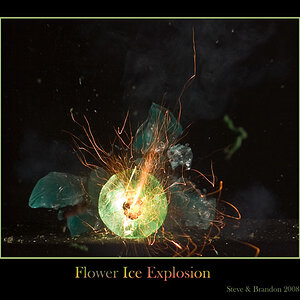
You just confirmed the learning process. Here's a good example from back in 2024.
I didn't have a restaurant with all the right features and color, nor could I find anything in stock photos. The same photo could be created with your colorful sunset...if I remember the colors and sky, I can regenerate it with text to image as a background for a couple shot in studio. Whether you learn something immediately or it spawns an idea later it's still learning.
generative AI "averages" or blends what it sees.
My understanding is that it's learning, not just from the data set, but also from the one giving the instructions. I've found the more I use it the more closely it matches what "I want" the first time.
And it's not creativity as a photographer generating photos, it's creativity as computer technician generating a visual image
Never said it was, I said it's the artist who ultimately provides the creativity. You wouldn't try and differentiate a painter as not having real creativity because they painted something from the mind (unless it was really bad, LOL), you wouldn't differentiate a sculpture as not having real creativity because they worked with clay, you wouldn't differentiate a master carver as not having real creativity because they worked with wood or stone. In the case of text to image, the correct term is AI Artist, calling them less is demeaning.
I'm very cautious as regards AI, I saw all the Terminator movies, and we're only 3 years away from 2029.

For me the potential for copyright infringement is nothing compared to the challenges moving forward. Already mentioned is the prejudice or bias possibility. Another is the truth in advertising issue. If you generate an image of the ideal woman based on the preference of your target group, and then used that image in an advertisement for your product, without a clear understanding to the viewer that it's AI generated, that's deceptive advertising. As
@acparsons will be teaching the next generation of AI users, I hope that he includes a little on the challenges, as well as just how to use it.