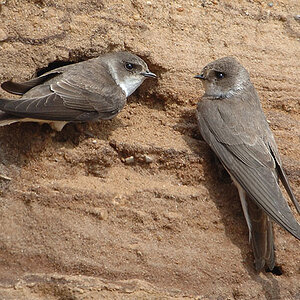
The two ways of showing the context, are to place the other side of the interaction into the frame of the image (person that the subject is talking to, or the object/person which give us the clues as to what is going on), and to include some other visual clue which explains the situation. This usually means finding a vantage point or angle that allow you to create this subject/object relationship. Having a wide-angle lens actually will work against this idea, because it will pull in a lot of extraneous detail that will diminish our understanding.
Events are held under some concept, to which the audience for the images is not party to. Unless the images are to be viewed only by those who were at the event (in which case the context will be known to them), it helps viewers who are not familiar with the situation to see within the image the clues. I'm not saying that it is easy to capture this context, but it makes for a much stronger image if all the clues needed to interpret the activity is in the frame.
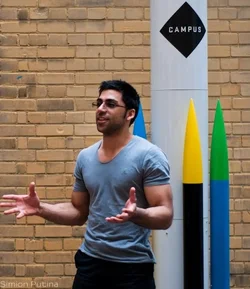
So, #1: what was the discussion about? Who was just outside the frame? What was the role of the person who you captured in the image? Why was that important?
#3: What was the speech about? What is the significance of the person giving the speech? Who was he giving the speech to?
These are some of the questions that come up when looking at images like that. Sometimes, it is just not possible to capture the needed clues during the event, in which case you will need to do a separate session (before or after) to set up the shots that will communicate that information.




![[No title]](/data/xfmg/thumbnail/31/31979-ea92aca54ae865842d998c9cec534991.jpg?1734160756)