What's new

Cold bitter truth please.

redlazer

TPF Noob!
Joined
Apr 21, 2011
Messages
40
Reaction score
0
Location
Snow Camp, NC
Can others edit my Photos
Photos OK to edit
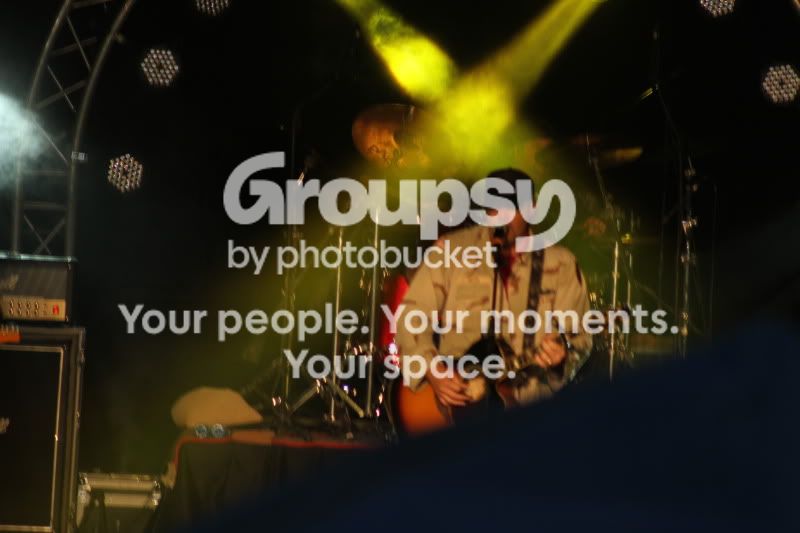
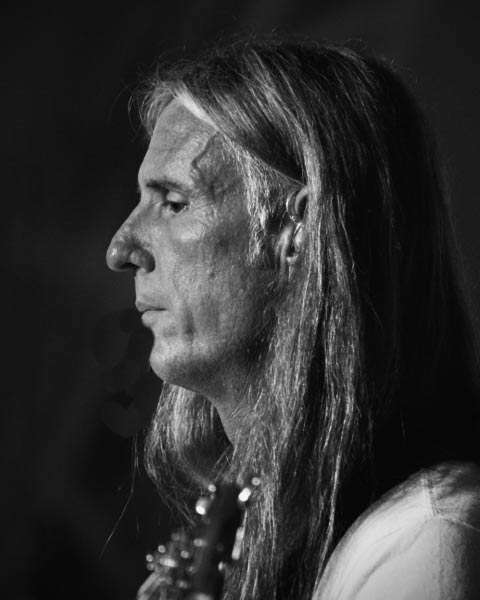
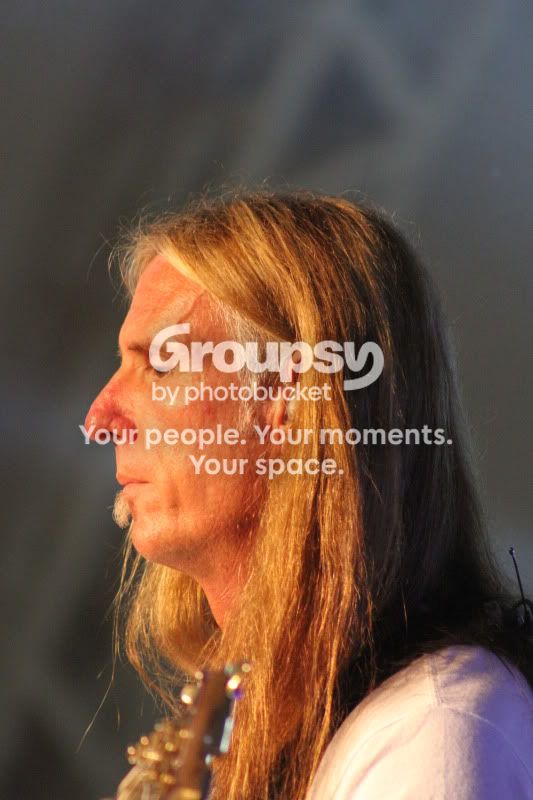
these 2 pics that I took with the 75-300mm USM III. let me know what is wrong with them, and what can be done form them to come out better. thank you. Also these have not been in photoshop yet.
064.jpg

050.jpg
 
Boring compositions and the second is out of focus.
 
as jritz said the composition in the first one lacks strength. From the way I see it your light source is in the left and you are facing your source and then clicking a side view. Why not face the camera and then click..it'll have half your face illuminated and half of it in dark..i guess that would make it a li'l interesting

second one is clearly out of focus and a guy is blocking the right side of the photo which is distracting and also i guess it's not aligned properly.
 
From what I gather:

1) You should never cut out part of a musicians instrument. Try to get a better composition other than centered. (rule of thirds). It doesn't really convey any emotion. If it weren't for the blurred out guitar headstock, I would think you just took a picture of a guy waiting for a bus.

2) The subject (the singer) seems to be way out of focus. Were you using auto focus or manual? Also, something seems to be blocking the bottom right quarter of the picture, not very attractive looking. Again, composition. Your subject is almost dead center. For the most part, you don't want to do that. Also, this one looks a bit under exposed, but that can be handled in PP most likely.
 
This is the best this lens will perform in these conditions.
 
Even the out of focus? I mean I understand the small aperture at that focal length attribute to the darkness, but the focus can at least be helped right? He can always brighten things up in lightroom.
 
Rancor to be a great photographer you need to get things right in the camera. An old saying still applies today, "there's no money in the dark room," only in today's terms there's no money in photoshop/lightroom. Honestly if you have to keep changing your exposure significantly in an editing software than you need to go back to first grade and really nail your exposure triangle. Also, while you can fix some things in these programs, light cannot be changed drastically in the post process or your images will look terrible. I suggest to all those struggling, learn your equipment, get it right (or as close as you can) in camera, and know your basics. If you can't nail focus yet, than don't shoot concerts, if you can't shoot in low light, don't shoot concerts. Just learn the basics before you really decide to step out of the box.

 
Gotta agree with Vince. Looking at the EXIF, shutter speeds are way too slow for 300mm. In the second pic, I would guess it's not OOF, but rather camera shake, 1/60sec @ 300mm. General rule of thumb time: Shutter speed to counter camera shake, should at a minimum be 1/focal length (unless you have IS), so you needed 1/300 in this case. Given the lenses max aperture of 5.6 at 300mm, it's undoable. This isn't a low light lens.
 
Even the out of focus? I mean I understand the small aperture at that focal length attribute to the darkness, but the focus can at least be helped right? He can always brighten things up in lightroom.

This lens' auto focus is very slow, it will bouce back and forth not locking in very well in conditions in photo #2. In fact it's faster and more accurate to manual focus this lens. The best aperature you'll get at 300mm is f5.6, not a good low light setting. This will cause you to slow the shutter to 1/60th when the minimum shutter should be around 1/300 for that focal length. There is now motion blur. The iso is only set at 400 when it should've been 1600 or more but then it introduces alot of noise. At full 300mm this lens is "ok" focus at best. Read the below review, it's really accurate.
Canon EF 75-300mm f/4-5.6 III USM Lens Review
To take photos in indoors with minimal lighting you need a low light, good quality lens or the use of studio lighting/flash. This lens is good for outdoor sunny days for landscape images using a tripod at 150-200mm with still objects.
.
 
Rancor to be a great photographer you need to get things right in the camera. An old saying still applies today, "there's no money in the dark room," only in today's terms there's no money in photoshop/lightroom. Honestly if you have to keep changing your exposure significantly in an editing software than you need to go back to first grade and really nail your exposure triangle. Also, while you can fix some things in these programs, light cannot be changed drastically in the post process or your images will look terrible. I suggest to all those struggling, learn your equipment, get it right (or as close as you can) in camera, and know your basics. If you can't nail focus yet, than don't shoot concerts, if you can't shoot in low light, don't shoot concerts. Just learn the basics before you really decide to step out of the box.

I know there are limits to the software, but they can help. Its not a time machine, but its duck tape with some glue. I keep hearing different things as far as the in camera / post camera argument. Some people say get it right in the camera and you wont need as much, if any, PP. Others say if you shooting RAW than its okay if your not dead on in the camera because PP can take care of it.

Being a technology buff over a traditionalist, I choose to follow the latter. I know that when dodge and burn meant physically dodging and burning a print, that getting it perfect from the ground up was important, and I'm not saying its not important now, but we do have way better technology at hand in 2011, so we don't need to shoot like its 1955.
 
This isn't so interesting primarily because there is absolutely no expression of interest or emotion on the person's face. He is not intent on anything - he isn't even showing relaxation. Technically he is too close to the left edge, he's up against a wall and yet there is lots of room at the top. (and eliminate that blob below his lip.)

llbw2064.jpg
]

Being out of focus is not the killer here. What does do it in is that the mike stands are in focus. It is ok to have images off true but here it just looks like an accident.
Square up the verticals, (that also eliminates that flare to the left that pulls the eye), blur the entire image so that the missed focus isn't obvious and so can retrieve it as 'art', accidental art, but art.


ll050blurry.jpg
 
This is a direct quote from the review liked above.
"If you care about great image quality and sharp photos, the Canon EF 75-300mm f/4-5.6 III USM Lens is not for you. And Photoshop cannot enhance details that are not there."
 
A brief lesson on Transparancy film, print film, and digital. And my apologies to the OP for further high jacking your thread. It's all about dynamic range. Transparancy film has by far the highest DR. Those pics you see in National Geographic from 20, 30 and more years ago were usually, if not always shot with transparancy ( or slide film, if you wish) film. You had to nail it in camera, as there really isn't any processing you can do with it. The processing had to be done during the actual printing for the magazine. Print film has less DR. People who are anti Photoshop, and never developed their own color print film, don't realize there is a great amount of processing during the developing of print film. These processes were/are color correcting, contrast adjust, sharpening, etc. (hmmm, sounds like the same stuff we do with Adobe products to our digital pics). Digital has by far the least DR out of all three media. There really is no "getting it right in the camera" with digital. There is, however, "getting it as close as possible to right as you can get with digital due to it's lack of DR". Whew, that was a mouthful. All digital pics need some post to coax out the DR that wasn't captured. The thing is, the better your gear, and the better your exposure, the less tweaking you need. Here endeth the lesson.
 
I have that lens and I agree whole hearted. On a tripod, you can shoot some decent things, but as a walkaround lens, you really need to have your knowledge of the exposure triangle down. It's not suited for low light, it creeps, it has trouble focussing.
 
yea it was hard to get any pics with out the shoot being blocked im only 5'3" so everyone is taller than me making it hard lol. these are the first pics i ever took with a dslr.
 

Create an account or login to comment

You must be a member in order to leave a comment

Create account

Create an account on our community. It's easy!

Log in

Already have an account? Log in here.

Back
Top Bottom