What's new

Confused about custom white balance

Quovadis

TPF Noob!
Joined
Jul 24, 2016
Messages
325
Reaction score
11
Location
Fort Myers, Florida
Can others edit my Photos
Photos OK to edit
Hey guys,
I have finally ordered 4 strobe lights (250 watts each) and softboxes which will replace my current cfl bulb set up.
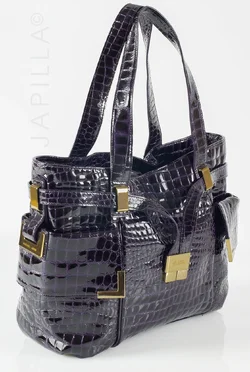
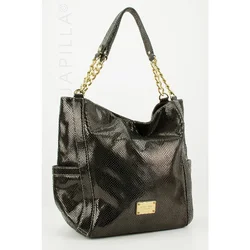
As many of you already know, I photograph highly reflective leather and canvas bags, and to give you some background, it has been a daunting task doing this with cfl bulbs, because of reflections.

Here is my question, and what I am totally confused about.
To create a custom white balance with my Nikon using continuous light, it's quite easy, I simply aim the camera where the white area is, or at a subject that is not placed there yet. I simply go into the Nikon menu, select white balance and measure it. The camera asks me to take a photo and the white balance of that particular cfl set up is recorded. However there is always continuous light there, so a white balance can be recorded.

How do I do this with strobes? Keep in mind when i receive the strobes I will have no clue how to adjust the power output the very first times I use the strobes, I will have to do some trial and error.
How do I measure the white balance? I have read on the internet I should use a grey card? But how to measure it if my lights are off? When i ask my nikon camera to measure white balance, will this trigger the strobes?
Why do some people want to use a grey card? Yet the Nikon instructions tell me to aim at a white area?
Could someone explain how to calibrate a white balance the very first time using strobes?

Yet another guy on the internet says you can take a picture and calibrate the white balance in the raw file, then upload the picture back into the camera? How is this possible? I'm so confused it's unreal.
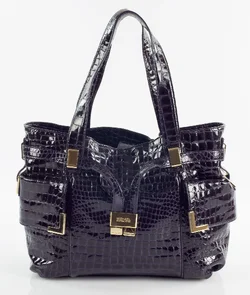
 
This is what a cfl reflection nightmare looks like!!
 

Attachments

  • 1.webp
    1.webp
    416.5 KB · Views: 347
Shoot a white balance target under the same lighting as you will shoot the subject and and adjust in post. If you have good quality strobes, then their colour temperature will remain constant irrespective of power or # of flashes and this won't be required after the first time. I use the X-Rite Colour Checker Passport. A gray card is a form of WB target; you shoot it in the scene, import the RAW file into Lightroom and click on the target with the WB tool; presto, instant correct colour temperature. I almost never bother with setting a custom WB any more; it's easier to do it in post.

The strobes will ONLY be triggered (you did order some form of trigger, didn't you?) when you push the shutter release button, the test button on the trigger, or the test button the strobe.

Bear in mind that reflections have NOTHING to do with your WB and you will have the same problems with strobes unless you position them correctly. Remember that angle of incidence equals angle of reflection; in others words: If your light is aimed at the subject at an angle of 45 degrees, than the reflection will appear at an angle of 45 degrees. Controlling excessive specularity as seen in your example usually requires a combination of several factors: Change of light angle with respect to the subject; change of distance between light and subject (as long as power is lowered appropriately, then the closer the light, the softer and less specular it will be), adding extra diffusion and/or polarization.
 
Yes I have bought a trigger for each strobe, I do not trust the slave function.
My biggest fear with strobes is not being able to see reflections in the viewfinder before they happen. How can i control what I cannot see?
With cfl's at least i can see the little buggers, and move my camera and lights. Sometimes, it takes me 20 minutes before a shot to move everything around, until i can find a spot of "least reflection".
However with so many cfl bulbs 26 bulbs x 85 watts, there will always be reflections.
It is unclear to me how much distance i need between the subject and the strobes, I am hoping to bounce the strobes off the ceiling instead of having to point them at the subject.
The strobes will be set up Monday, and at the moment I am very apprehensive. I do not know why, but I feel strobes will give me even more reflections. Each strobe will be in a softbox with dual diffusion layers.
As for the white balance, you are right, who cares...I change everything around a first time in the raw editor, then in photo shop i use selective color. I have tons of custom actions to increase and decrease color, levels, sharpness etc..
For reflections I use the dodge tool, etc..
Not very satisfying though knowing each picture sucks before post.
 
Yep then it would be a $400.00 book instead of a $40.00 book.
 
Yes I have bought a trigger for each strobe, I do not trust the slave function.
My biggest fear with strobes is not being able to see reflections in the viewfinder before they happen. How can i control what I cannot see?
It's o.k., you can trust the slave function. Just don't cover any of the sensors.

Do your strobes not have modeling lights built into them? These modeling lights should be turned on when you are using your strobes. That is why they're there.
 
One thing that I feel very apprehensive right now is the following. In fact, i cannot even imagine a solution to the problem.

With continuous light, you can always see reflections, and can move the camera right and left up and down. I can even angle the bag in a different direction. All of this can be done in "real time" before taking a shot.
What you see before the shot is what you get once the shot is taken. In other words i can see the reflections beforehand, and judge whether they are acceptable or not. I can even hold a piece of paper near the light box to minimize or block that particular reflection.

With strobes how is this possible? I have to position a strobe to an area where i "think" there will be no reflection? Then take a shot? It's like being blind.

I then take a blind shot? See it's all wrong...then what? Move my strobes a little blindly a second time?
 
Specular bright spots can also be controlled with black flats and scrims.
A product photography lighting bible so good its now in its 5th edition:
Light Science & Magic: An Introduction to Photographic Lighting

I read it, but do better with visual videos than I do books. If the author were really smart, he would make a video of each example.
The authors ARE really smart, that's why they wrote that book that you can take anywhere you go as a reference and why the book has been around more than 20 years and is now in, what, it's fifth printing? You're absolutely right, you're not going to see the reflections until you've taken the shot, but, with a little effort and practice you will get the hang of it.

I don't mean to sound condescending or rude, but you seem, like a lot of people to suffer from the misconception that this is easy. It's not difficult, and it's not rocket surgery, BUT... it does take a bit of skill and a LOT of practice. If I were lighting that bag I could see it easily taking me a full morning to get things exactly the way I wanted them. Now, that said, once you have that set-up, it's really not going to need more than very minor tweaks for most other bags.

As I said to another poster in a very similar situation, unless you actually devote some time to practicing, then this is never going to work. Once you get your strobes, clear your calendar for a week. Grab one of your bags, doesn't matter which one really, but I'd go for one that you think will be a challenge. Set up your strobes, open up LSM and put it on a table, and start practicing. Your first few hundred (or maybe even thousand) shots will probably be utter crap, but eventually, you will get the hang of it. If you remember nothing else, remember: Angle of incidence equals angle of reflection and the closer the light, the softer the light.

EASY?????????????? it's by far the hardest thing I have ever tried. This is what I do every day from dusk to dawn. Been doing it for a year now. At first I did not really care about picture quality and reflections, now I do.
 
One thing that I feel very apprehensive right now is the following. In fact, i cannot even imagine a solution to the problem.

With continuous light, you can always see reflections, and can move the camera right and left up and down. I can even angle the bag in a different direction. All of this can be done in "real time" before taking a shot.
What you see before the shot is what you get once the shot is taken. In other words i can see the reflections beforehand, and judge whether they are acceptable or not. I can even hold a piece of paper near the light box to minimize or block that particular reflection.

With strobes how is this possible? I have to position a strobe to an area where i "think" there will be no reflection? Then take a shot? It's like being blind.

I then take a blind shot? See it's all wrong...then what? Move my strobes a little blindly a second time?
:icon_pissedoff:This is where the practice comes in. The learning... you need to understand that you're trying learn in a few hours or days what some professionals have worked on for years. Lighting is an art unto itself. The process is this: Look at the product, decide how you want to light it. Move in your key light, make sure you don't have an angle issue, do a test, adjust as necessary. Move in your fill, repeat. Etc, etc...
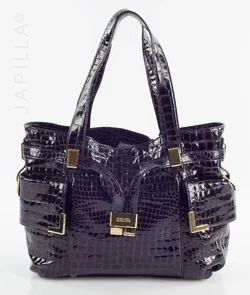
 
Canvas bags are easy, I can do them blindfolded, they do not reflect. Bags like this are my nightmare
 

Attachments

  • 1.webp
    1.webp
    414.4 KB · Views: 251
  • 3.webp
    3.webp
    352.7 KB · Views: 228
  • p2.webp
    p2.webp
    395 KB · Views: 241
EASY?????????????? it's by far the hardest thing I have ever tried. This is what I do every day from dusk to dawn. Been doing it for a year now. At first I did not really care about picture quality and reflections, now I do.
I say easy because you seem frustrated that you're not knocking this out of the park on your first go. I've been doing this long enough now that when I set up my lights, they're generally pretty darn close right off the bat, but MAYBE one time in a hundred if I'm really lucky do I not have to adjust anything. The simple fact is, it takes time. Once you get a set-up that works, tweaking for each bag should take no more than 10-15 minutes.
 

Create an account or login to comment

You must be a member in order to leave a comment

Create account

Create an account on our community. It's easy!

Log in

Already have an account? Log in here.

New Topics

Back
Top Bottom