What's new

first time hdr

Not exactly. The problem is, that you're not getting a real HDR. If you look at your picture more carefully, you'll see, that you have still some dark areas in your image. Such black areas have no place in HDR images... Those areas are COMPLETELY black without any detail. You can recover some of the detail using the video-tutorial mentioned in this thread, but it has its limits as you surely see. And it isn't HDR by any means...
If you would have taken 3 or more bracketed photos to cover the whole dynamic range, you'd get a different image without pitch black areas. ;) That means changing the exposure in pp ISN'T as effective as exposure bracketing with more photos.[/QUOTE]

Very true I'll give you that! I'm just trying some things out using the theory behind HDR.
 
in the original photo the bottom portion was way underexposed and the sky was way overexposed I think I did a decent job of saving this photo using multiple layers aat different exposures and learned some new tricks along the way. Isn't the whole point of HDR to have all the details of a photo as equally exposed as possible so that it pops? I may not be explaining this right but I do understand what HDR is!
I'm glad you're learning, I'm glad you're trying new stuff etc :) I just wanted to make sure, that you know, that this isn't HDR. It's just recovering some of the details.
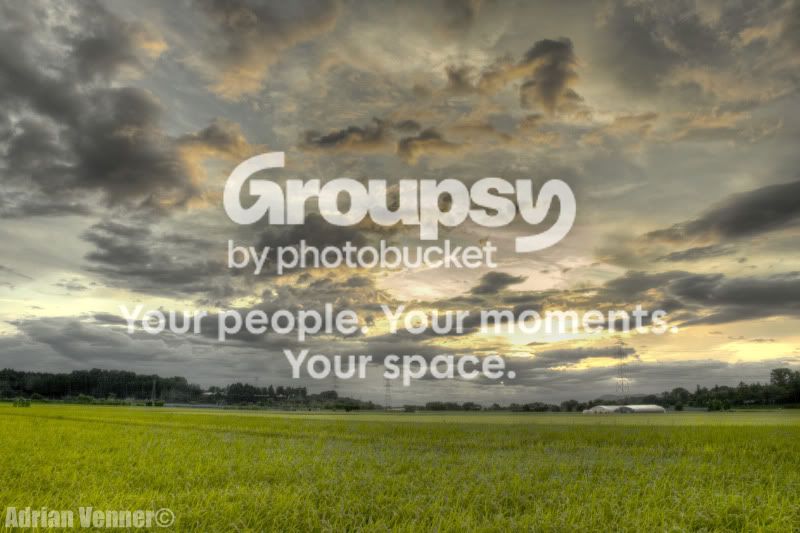
Isn't the whole point of HDR to have all the details of a photo as equally exposed as possible so that it pops?
Sure, but as you see, it can't be achieved by using a single photo and that's the whole point... If it was possible, why would people use 3, 9, or even more photos to cover the whole dynamic range, if all it takes was to change the exposure in pp?

This photo you took and processed is a nice example that the result isn't the same and you can't substitute more photos by a single one...
 
in the original photo the bottom portion was way underexposed and the sky was way overexposed I think I did a decent job of saving this photo using multiple layers aat different exposures and learned some new tricks along the way. Isn't the whole point of HDR to have all the details of a photo as equally exposed as possible so that it pops? I may not be explaining this right but I do understand what HDR is!
I'm glad you're learning, I'm glad you're trying new stuff etc :) I just wanted to make sure, that you know, that this isn't HDR. It's just recovering some of the details.

Isn't the whole point of HDR to have all the details of a photo as equally exposed as possible so that it pops?
Sure, but as you see, it can't be achieved by using a single photo and that's the whole point... If it was possible, why would people use 3, 9, or even more photos to cover the whole dynamic range, if all it takes was to change the exposure in pp?

This photo you took and processed is a nice example that the result isn't the same and you can't substitute more photos by a single one...


That's fair
 
Hey guys.

I think the OP was just stating that he thought he did a good job of recreating a HDR "look" not an actual photo. He stated he knew what a real HDR photo was. Ease off a tad perhaps :-). I know what a true HDR is and im a massive fan of the genre :-). I recently shot a sunset off the cuff with no ND filter (Doh!!) and even though I couldnt get both foreground and back with one image I took my image home used Photoshop to grab multiple EXPs and used photomatix to process. I know its not real HDR but its a means to an end to accomplish a look where a real HDR would have been impossible.

sunset.jpg
 
gosh photoshop inspires laziness. I know this because I am definite victim... I think if I were older than 22 years old I would be one of those 'elders who claim the glory days of film are over and digital is spoiling all these young whipper snappers' :lol:

(and I happen to agree, its just my bank account refuses to pay per shot, the cost of film.. hopefully eventually)..
 
Such black areas have no place in HDR images...

I disagree with this statement. HDR is to extend the dynamic range of the camera. I feel it is perfectly acceptable to extend that range as much or as little as the photographer desires. Suppose I am shooting in a huge room with black walls and a chair in front of a small window with direct sunlight hitting it. Maybe I want to properly expose the sky and the chair, and the area around the chair, but leave the rest of the room in complete blackness. This is not possible without multiple exposures, but that doesn't mean that I MUST have detail in the darkest areas of the room in order for it to be qualified as "HDR".

If you are combining at least *2* images to extend the dynamic range of your camera, I consider it to be HDR, regardless of how you process them or how many stops difference the exposures are, or regardless of how much black or white is clipped. It's up to the artist, right?
 

Create an account or login to comment

You must be a member in order to leave a comment

Create account

Create an account on our community. It's easy!

Log in

Already have an account? Log in here.

Back
Top Bottom