What's new

Full Portraits in Film

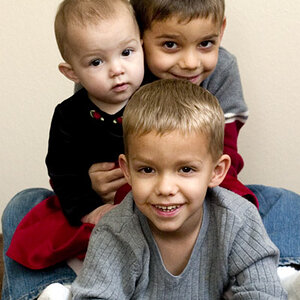
I'm sorry, but I don't buy this "It's not underexposed, it's the way the light was."

That is, totally and completely, malarkey.

So, I'm shooting indoors in a church... Very dim. I decide to shoot a mostly black frame "because that's the way the light was." How does that add to the image? How does not seeing the subject speak about the image? Much in the same way that having an underexposed subject in portraiture negatively effects the impact of the image.

Your job, as a photographer, is to make light the way its meant to be to make the best image possible. Whether that's altering your exposure, or adding light.

Yes. Your images are underexposed. Could have easily been fixed by a 2/3rds of a stop slower shutter speed. Would it have made the images better? In my opinion, definitely. Because the first thing I noticed was how muddy the shots were.
 
I'm sorry, but I don't buy this "It's not underexposed, it's the way the light was."

That is, totally and completely, malarkey.

So, I'm shooting indoors in a church... Very dim. I decide to shoot a mostly black frame "because that's the way the light was." How does that add to the image? How does not seeing the subject speak about the image? Much in the same way that having an underexposed subject in portraiture negatively effects the impact of the image.

Your job, as a photographer, is to make light the way its meant to be to make the best image possible. Whether that's altering your exposure, or adding light.

Yes. Your images are underexposed. Could have easily been fixed by a 2/3rds of a stop slower shutter speed. Would it have made the images better? In my opinion, definitely. Because the first thing I noticed was how muddy the shots were.

Fair enough. Like I said earlier though, I did attempt to up the exposure in post processing. I felt like I found a decent medium with the exposure. Anything higher tended to wash out their faces. I still have a lot to learn with the program Lightroom. Hopefully I will be able to learn how to improve images like these whilst still keeping them realistic without too much editing. Also I still have a lot to learn with shooting in film instead of digital.

Thanks for the advice!
 
What people are seeing as underexposure may well be just poor scans. These appear to simply have a very limited tonal range, both up and down, much less than film does natively. Somewhere between the negative and the JPEGs we're looking at, things got pretty squished.
 
Joey
I think you'd benefit from some further understanding of the way your light meter works in your camera too. Get yourself an 18% graycard at the nearest photoshop; they're cheap. take your light reading off of it for a true reading. Your meter reads 18% gray but your scene rarely matches that so you end up with a compromise that your camera has chosen for you. Take your reading off the card and then set your aperture / shutter combination accordingly; It's a good idea also to bracket exposures if you are in doubt...one exposure based on the reading and then 1/2 to 1 stop over and 1/2 to 1 stop under usually gets you close enough.
 
What people are seeing as underexposure may well be just poor scans. These appear to simply have a very limited tonal range, both up and down, much less than film does natively. Somewhere between the negative and the JPEGs we're looking at, things got pretty squished.

That may very well be the case.
I had the film developed at cvs (don't know where else to go), I had them put the images straight onto a cd instead of making prints, from there I imported them to my computer and did a little bit of editing in lightroom.

Just wanted to give you an idea of the process I went thru to get these images to this point. Maybe it'll make things a bit more clear.
 
Joey
I think you'd benefit from some further understanding of the way your light meter works in your camera too. Get yourself an 18% graycard at the nearest photoshop; they're cheap. take your light reading off of it for a true reading. Your meter reads 18% gray but your scene rarely matches that so you end up with a compromise that your camera has chosen for you. Take your reading off the card and then set your aperture / shutter combination accordingly; It's a good idea also to bracket exposures if you are in doubt...one exposure based on the reading and then 1/2 to 1 stop over and 1/2 to 1 stop under usually gets you close enough.

I'll definitely check that out. I'm going to start trying to bracket exposures for each shot like you said as well. Thanks for the suggestions!
 

Create an account or login to comment

You must be a member in order to leave a comment

Create account

Create an account on our community. It's easy!

Log in

Already have an account? Log in here.

New Topics

Back
Top Bottom