What's new

impatience and haste, killing the photo's?

Uselessboy

TPF Noob!
Joined
May 13, 2013
Messages
11
Reaction score
1
Location
Holland
Can others edit my Photos
Photos OK to edit
okay, time for a little strange thing as my first post;
I have been actively photographing stuff for quite a time, but I continualy find that my trigger-finger is too quick and I forget to finish the photograph before I have taken it.
I find that when I shoot, I just just a millisecond too early or too late, resulting in those little annoying details going awry.
Since I often photograph horses and animals, I am both looking out for my safety and that of my camera, as well as checking the action going on, ánd making sure my settings are correct, and I notice myself getting overwhelmed every time I take pictures of living things like this.

My greatest joy is in photographing either nature, or (presumably) models. I own a resin-cast doll on which I often practice my photography, and those pictures always come out way better since I can easily take my time in posing her without invoking boredom, and I can settle down and take the photograph at my leisure, but when working with people and animals, I can't seem to get that comfortable.
So, does anybody have an idea on what I can do to make this work better? Tips or tricks on preparation and practicing on anticipating situations perhaps?

The thing is that I can see the mistakes áfter I've made the photographs, but I need to see them beforehand. I'm a bit of a purist in that respect, since I prefer not to photoshop at all, and at most, crop a bit and correct the contrast and adjust the colour-warmth...

Examples if my impatience below
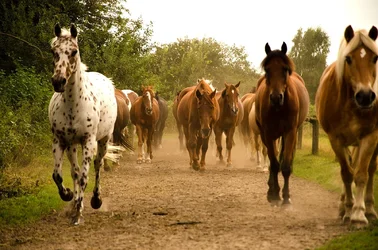
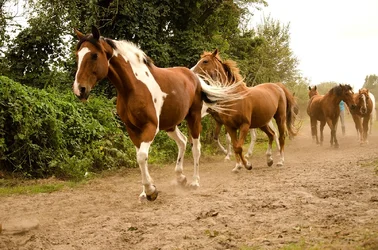
$DSC_0946I.webp Off-centre, horse onthe right is cut off, and there is room on the left
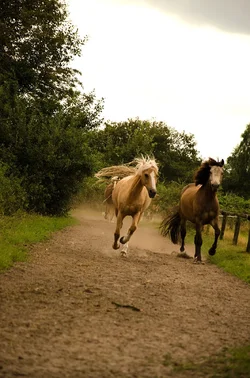
$DSC_0911I.webpoff centre
$DSC_0956I.webproom on the right, human in blue shirt in the background
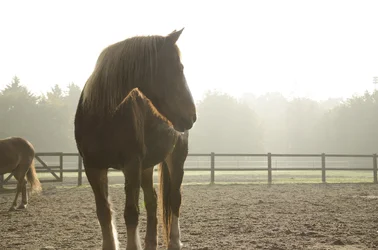
$DSC_2725.webp Horsebutt on the left, too light for silhouet, to dark for normal photograph

Examples of Succesfull Photographs
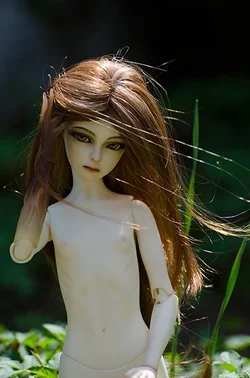
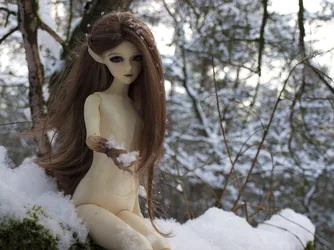
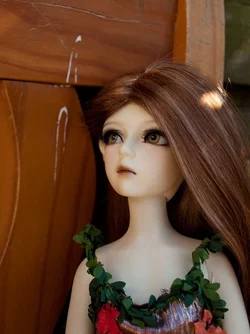
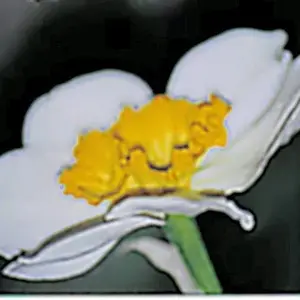
$DSC_5362.webp$Have-a-snowflake.webp$_1019490.webp

In case someone notices that two of the pictures of the doll (the one with the wooden chair and the one in the snow) are taken with a different Camera, you are correct; those were taken when I still was using my Olympus E-420, since then I've gone over to my current Nikon D7000
 
Well, the obvious answer is "practice".

I can suggest some exercises, though:

Get into some context where the sort of thing you find hard is going to happen.

- Just hold the camera and watch. Take no pictures. Just try to say "click" very quietly at that perfect moment.
- Actively try to take pictures TOO SOON. Try as hard as you can to take the photograph 1 or 2 seconds before the right time.
- Actively try to take pictures TOO LATE. Look for that 1 to 2 seconds after the moment has passed.
- Now try to take pictures at the right moment, but damn the framing, focus, everything else. You just want the MOMENT.
- Now try to take pictures with everything EXCEPT the right moment. Let the moment go, who cares about the moment? It's.. framing right now! Or whatever.

Go back and forth on these things a bit.

These are the sorts of things musicians use a lot when they're struggling with a problematic piece of passage.
 
All of the horse pics can be "fixed" by cropping.

The doll pics don't exhibit much in the way of modeling light.
 
Well, the obvious answer is "practice".

I can suggest some exercises, though:

Get into some context where the sort of thing you find hard is going to happen.

- Just hold the camera and watch. Take no pictures. Just try to say "click" very quietly at that perfect moment.
- Actively try to take pictures TOO SOON. Try as hard as you can to take the photograph 1 or 2 seconds before the right time.
- Actively try to take pictures TOO LATE. Look for that 1 to 2 seconds after the moment has passed.
- Now try to take pictures at the right moment, but damn the framing, focus, everything else. You just want the MOMENT.
- Now try to take pictures with everything EXCEPT the right moment. Let the moment go, who cares about the moment? It's.. framing right now! Or whatever.

Go back and forth on these things a bit.

These are the sorts of things musicians use a lot when they're struggling with a problematic piece of passage.


Those sound like really good exercises, thanks.

All of the horse pics can be "fixed" by cropping.

The doll pics don't exhibit much in the way of modeling light.

well, call me a bit of a noob, but I've tried that a number of times, but I couldn't vind the right position when cropping.
And the doll doesn't exhibit much in the way of modeling light since they were taken outside, on my own, and I had no idea on how to use the flash to get a desired result. In the first one of the three doll-photographs I did have access to a reflector which I had to operate using my feet, since the wind was blowing and it wouldn't stay put...
 
Last edited:
I think the short list of exercises amolitor lists above sounds like an excellent way to work on your timing, anticipation, and reflexes. All three of those things affect your photos.
 
I think the short list of exercises amolitor lists above sounds like an excellent way to work on your timing, anticipation, and reflexes. All three of those things affect your photos.
They indeed do sound like good practices. It's odd, but it sounds so logical when you think about it
 
Another thing to remember is that animals are tricky - especially something like those horses where you've an animal moving without much guidance. At that point familiarity with the animal and with the specific individual or herd can help significantly with learning where to prepare to take a shot because you'll learn where they are likely to be moving toward or into. This is something that comes with practice and ties into learning to anticipate the shot practices.

Sports and such work along similar principles - learning and knowing the flow of a game inside and out so that you "know" where the game is likely to go and can predict the flow of the match and thus the action and thus where the shot is likely to be and when. You won't get it the first time - nor the second - you'll have to go again and again to get it (also note that experience outside of the camera helps in this as well).
 
Just how it is. Make videos and capture the image you want.
 
Another thing to remember is that animals are tricky - especially something like those horses where you've an animal moving without much guidance. At that point familiarity with the animal and with the specific individual or herd can help significantly with learning where to prepare to take a shot because you'll learn where they are likely to be moving toward or into. This is something that comes with practice and ties into learning to anticipate the shot practices.

Sports and such work along similar principles - learning and knowing the flow of a game inside and out so that you "know" where the game is likely to go and can predict the flow of the match and thus the action and thus where the shot is likely to be and when. You won't get it the first time - nor the second - you'll have to go again and again to get it (also note that experience outside of the camera helps in this as well).

well, in terms of familiarity with this herd, I am véry familiar with it, I visit it every week for an hour or six. it's pretty much what I do as a hobby next to photography, so that's not really an excuse for me; my main problem I could say is that I didn't anticipate them. My familiarity with the herd is what allowed me to stay pretty safe amidst the stampede, despite being right in their path.
I do think I need to practice more with photographing them. It will be painfull to watch those moments go by and just say "click" rather than actually take the shot.
 
Yep when you suddenly have to use a camera you need to gain a new level of familiarity with the subject with respect to the camera. In general you will slowly find that the two will merge together and your outside of the camera familiarity will dramatically improve things over just having camera level familiarity. It just takes time for the two to merge together.
 
" timing, anticipation, and reflexes"

This is called shooting on-the-fly.
 
hmm,never thought of that.. interesting, and the name does make sense
 
I've been practicing a bit, though I'm a little too embarassed to show the pics I've taken yet... it's quite troublesome to purposefully miss the moment or shoot it too early...
I do notice I'm getting a better grip on the timing. My framing is still a bit too messed up, but I will try to go thát much further to get it right. I hope that next time I've made some pics, I'll be brave enough to show them.
 
QWell, see there--you are already getting better at your timing!!! One exercise that can really help with timing is this: take just five minutes, and try and shoot some photos where "a subject" is captured precisely within a small open space within the picture area. For example, take photos of incoming or departing jet liners in-between the links of a chain-link fence; or photograph walkers on the street, as they pass in-between parked cars; photograph bicyclists as they pass precisely by a specific shop sign, and so on. This gives you 1) a moving target and 2) a specific frame location at which you want the action to occur. It teaches you exactly the specific timing of your camera!
 
I think it takes a lot of practice. I've done sports (mostly hockey) and it took hours and hours of taking pictures at practices etc. to get good at it.

I don't know that I'd find it helpful to try to shoot before or after 'the moment', I think I'd just keep practicing to capture the moment you want to record. Realistically you're going to miss some - I think you just have to keep at it. I've gotten some where I moved and got some blur, the subject moved in an unexpected way, or I just wasn't able to catch the split second I wanted. Those are the ones where I might mumble or at least think something... maybe unprintable. LOL I often know as soon as I release the shutter that I missed it.

With sports it might be easier than photographing animals in that you can anticipate which way the action most likely will go; but then again the players don't necessarily go pose the way I want them to either.

I find it hard to shoot something coming straight at me or at an odd angle; maybe try moving around and changing your vantage point and see where you end up getting the best pictures. That might help too with framing the shots, so you're at a good distance to not crop off parts of the horses etc. Over time at our local ice rinks I found that I had certain corners that were my favorites where I often camped out, where the lighting was better or the glass wasn't too scratched up and I had a good view from a good angle of the net, etc.

If you feel like your timing is improving it might just take practice with the framing and keep working at it.
 

Create an account or login to comment

You must be a member in order to leave a comment

Create account

Create an account on our community. It's easy!

Log in

Already have an account? Log in here.

New Topics

Back
Top Bottom