What's new

impatience and haste, killing the photo's?

Just how it is. Make videos and capture the image you want.
Doh!
That makes you wonder why they ever continued making still cameras after 'moving pictures' were invented.

That, or it's just overkill of the spray-and-pray method of doing still photography - Make 10,000 photos to get 3 you want to keep. :lmao:
 
Yep, this becomes easier with time. I find myself watching my subjects really, really closely through the view finder and look for "tells" that they are going to strike a good pose or look. Settings should be set well before this moment, obviously.
 
that sounds pretty amazing... thanks for all your support...

QWell, see there--you are already getting better at your timing!!! One exercise that can really help with timing is this: take just five minutes, and try and shoot some photos where "a subject" is captured precisely within a small open space within the picture area. For example, take photos of incoming or departing jet liners in-between the links of a chain-link fence; or photograph walkers on the street, as they pass in-between parked cars; photograph bicyclists as they pass precisely by a specific shop sign, and so on. This gives you 1) a moving target and 2) a specific frame location at which you want the action to occur. It teaches you exactly the specific timing of your camera!
Would a cage-door on a cockatiel-cage work as well? The female is breeding right now, so she will occasionally shift position while the male is free to roam the cage..?

And having a vid-cam is something different in my opinion to photography. Their quality is generally not as high, it is locked at certain sizes which are normally only 1/3d of the full potential of a descent camera. So basically; spray and pray isn't really something for me. I want to siv through 20.000 to select 4, if you know what I mean
 
Just how it is. Make videos and capture the image you want.

Spray and pray...

It does kinda sound asif people really disagree with that method of shooting; and I want to make clear to a degree how I feel about it; It has it's strong points, obviously; when you're shooting really high-speed action like a falcon diving in on a (fake) pidgeon it's a good method to use, despite that, I'd not shoot it as video, but rather put my camera on either burst or continuous.
I just feel like it cheapens your quality as a photographer by using a shortcut like that. Burst and Continuous are sort of already on the limits of what I would consider doing with my camera. In my eyes, I want to capture that moment like a hunter, waiting for the right moment, and then snap that shutter to get that shot you want, without too much waste or junk photographs around on your chips. (I've shot around 50Gigs, and so far I've selected around 60 pics in total that I want to keep. I will keep all of them, but those +/- 60 are the ones I am proud of. The rest, not so much.)
 
I'm a bit of a purist in that respect, since I prefer not to photoshop at all, and at most, crop a bit and correct the contrast and adjust the colour-warmth...

Since you've gotten good advice on the rest, let me comment about this.
This is a bit of an unwarranted self-compliment.
If you take pictures with a digital camera you are post-processing because you've set the jpegs for the tones you want.
Saying you are a purist is inaccurate, you are just letting the camera decide what to do.

And many times, it is impossible to get the best or even good results without some intervention.
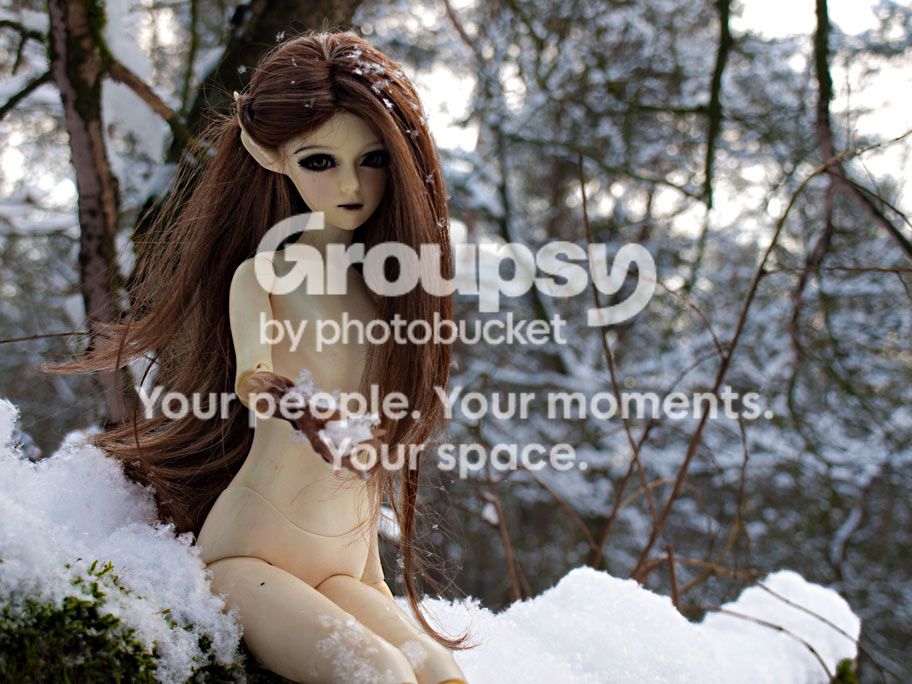
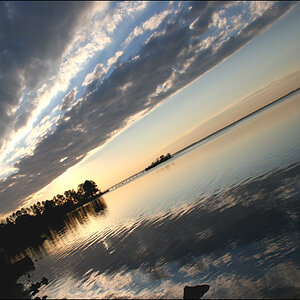
For example, here is your middle picture 'edited'

Have-a-snowflakellll.jpg~original
 
People often say that "back in the film days you didn't edit - you got it right in the camera and that was it". The problem is these people are ignorant. It's not totally their fault, a whole several generations grew up with film processing done "at the lab/chemist". They'd gather up their film canisters and send them in and wait for the reel of film and prints to come back (or slides).

What they didn't partake in was the editing and processing phase that takes place on the film - now yes most of your commercial setups would be generally running the same or similar process over most of the film and if you wanted more extensive editing you'd have to ask for it. If you equate it to modern DSLR shooting its like shooting in JPEG mode in the camera in that another party is making the final creative choices as to how the final print will show up.

Now digital can let you bring that processing home. You can shoot RAW and say "now this shot needs a bit more contrast - this one a little less - this one doesn't need any" etc... You don't have to go silly and start changing everything, but you (the photographer) get to make the final call on the appearance of your photo. It is an extension of the shooting phase where you already made significant choices in frame, exposure, creative touch (eg selective focusing).

Editing has always been there and in fact most of the tools in photoshop take their name and process right out of the darkroom - the only difference is that now you are working with pixels instead of chemicals and you also have an undo button.


As for "Spray and Pray" shooting be sensible. The extreme anti-argument against it is that "you're just shooting lots of wasted frames to get one that might work". In reality this method of shooting does not actually work. If you just spray and pray then most of the time you'll get junk with a very rare keeper in there somewhere. Even with the size of digital files and memory cards you'll burn right through them fast. Using burst mode is as valid a method as any other, don't avoid it just because "its cheating" because its not (in fact most of the "its cheating" people are not even keen photographers - or very experienced). What you do need to learn is timing - as this thread has already stated and shown. Time your shots, anticipate the action and take a series of shots. Chances are one of the first 3 frames will have that captured moment if you've learned to time your shooting right. The bonus is that now you can get maybe one or two of those split second motions that you would be physically unable to capture if you were just taking single shots (unless you were very lucky). You can get that in-between motions event just after or before the action event itself that might well show something new and creative.
 
People often say that "back in the film days you didn't edit - you got it right in the camera and that was it". The problem is these people are ignorant. It's not totally their fault, a whole several generations grew up with film processing done "at the lab/chemist". They'd gather up their film canisters and send them in and wait for the reel of film and prints to come back (or slides).
Yep, a lot of unseen image editing got done by the lab. Which is why the developing/printing service was generally known as photo 'finishing'.

The one type of film that accorded little room for post production editing was reversal film (transparencies, slides).
 
Just to add (because I forgot to mention it earlier); getting it right in camera is always important and most of the people I know who edit extensively are utterly mad about getting it right in the camera. Because its only when they get it right in the camera that they can pull and tweak the photo extensively whilst maintaining the quality and whilst some things can be fixed it often takes a massive amount of time to fix what can be done right in the camera in moments.

Some things are also (practically) unfixable - eg motion blur is generally something you can't fix in editing (technically you CAN fix it, but to fix it to look good will likely take hours upon hours and you'd likely be wanting to call yourself a digital artist by the end rather than a photographer ;))
 
ofcourse there is always some editing involved, I was well aware of that when I started even toying an old Olympus my dad baught me when I was about 12. That's also not the issue; my issue was mostly with the amount of waste continuous shooting or film-frame-selection(vidcap). Back then I was still limited to buying film for that Olympus so I had to make every shot count, since on the pocket-money of a 12 y/o, 1 roll of film was pretty darn expensive and you only had like (if I recall) 24 shots on a single roll?

I'm a bit of a purist in that respect, since I prefer not to photoshop at all, and at most, crop a bit and correct the contrast and adjust the colour-warmth...

Since you've gotten good advice on the rest, let me comment about this.
This is a bit of an unwarranted self-compliment.
If you take pictures with a digital camera you are post-processing because you've set the jpegs for the tones you want.
Saying you are a purist is inaccurate, you are just letting the camera decide what to do.

And many times, it is impossible to get the best or even good results without some intervention.
For example, here is your middle picture 'edited'

My sincere apologies if it sounded as a "self-compliment", that was not the intent, but rather my handicap rearing it's ugly head, so please don't take offence. I tend to say things in a radical sense occasionally. It's just one of the things that I have to cope with thanks to my Aspergers-syndrome. (that is also does not excuse the way in which I said it, but I did want to get that out of the way, and I hope for your understanding.)

My preference for less editing is sort of rooted in a few aspects of my preferred method;
"Learn to controll your camera."
If I can "fix" images too easily or adjust them too much in the PC I tend to get lax and not focus as much on getting the picture right before I transfer it too the PC. This was also drilled into my head a number of times during an (unfinished) graphic design education; "a bad picture can't get any better by editting; but a good picture can, so get it right in the camera first." It's sort of what everyone has been telling me since I started with this; it's an old habit, and it's pretty deeply engrained... In that respect, I said I'm a "bit of" a purist.
I didn't mean any disrespect, or to imply that I'm "above" using such methods. I don't look down on people who do edit their photo's a lot, and often at times I find myself admiring those who do. It was more a way of saying that it's way I've learned to do things that way. So if I came off as hostile or arrogant with that comment, please forgive me.

Also; in regard with the edit; can you perhaps recall what it is that you did there? Just out of curiosity; I come here to learn after all. I think it looks pretty neat in the edited version; though I'm unsure of the eyes, they seem to become a bit too dark to my taste. (please don't take that as a critique, it's just the opinion of a rookie after all.) The rest looks just very nice.

I am well aware of certain minor edits, but I tend to hold back as far as I can since I've seen a lot of pictures that I did back when I still had the E-420 Olympus that I contrasted too high, and too bright or dark, I suppose you could say that my current stance is the pushback, but I will keep working to finding the right balance between editing and leaving it as it is.

 
No offense either taken or meant.

I think that many people as they progress come to the conclusion that pressing the shutter button is only one step, a significant one, but one step in the chain of creation.
For me, the task is to get to the image in my mind's eye and how I do it is irrelevant.

Worshiping any process, like not post-processing or using alternative techniques or Polaroid transfers, is for me stopping short on the creative path.

Off topic:
Do you actually live in Holland? If so, where?
I lived in Germany, near Frankfurt, many years ago and we would go to Amsterdam several times a year - always staying in a B&B on the Prinzengracht.

Lew
 
well, I suppose that I'm just not that far just yet, and I stil have plenty of work to do before I reach said conclusion, don't I?

I live in Holland indeed; Eindhoven to be precise. It's pretty much in the upper regions of the lower-third of the country. Though I must admit; I've rarely travelled, and I've never been to 99% of the country. Maastricht, Eindhoven and Geldrop are pretty much the only places I've visited propperly. And two only because I used to live there.
 
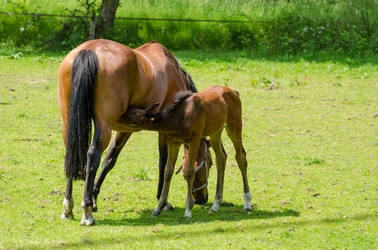
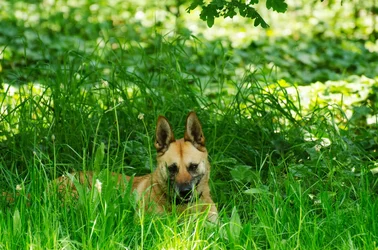
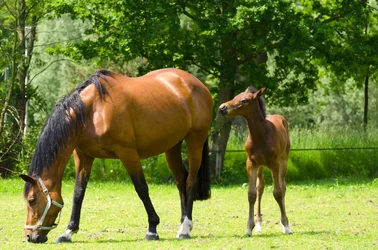
$DSC_5649.webp$DSC_5651.webp$DSC_5654.webp$DSC_5656.webp$DSC_5659.webp$DSC_5666.webp
Finally, a batch I'm sattisfied with enough to show. I tried to do a bit of practice with guiding lines and timing, in particular with the dog and the colt who were constantly curious and moving about. The colt and it's mother were just adorable, and every now and then he went back to drink.
I tried to pay more heed to the composition and timing, but somehow the dog still didn't quite make it into the golden cut. none-the-less, I'm quite pleased. What do you guys think? has my practice paid off, at last a bit?
 

Create an account or login to comment

You must be a member in order to leave a comment

Create account

Create an account on our community. It's easy!

Log in

Already have an account? Log in here.

Back
Top Bottom