What's new

New member, few questions about pictures

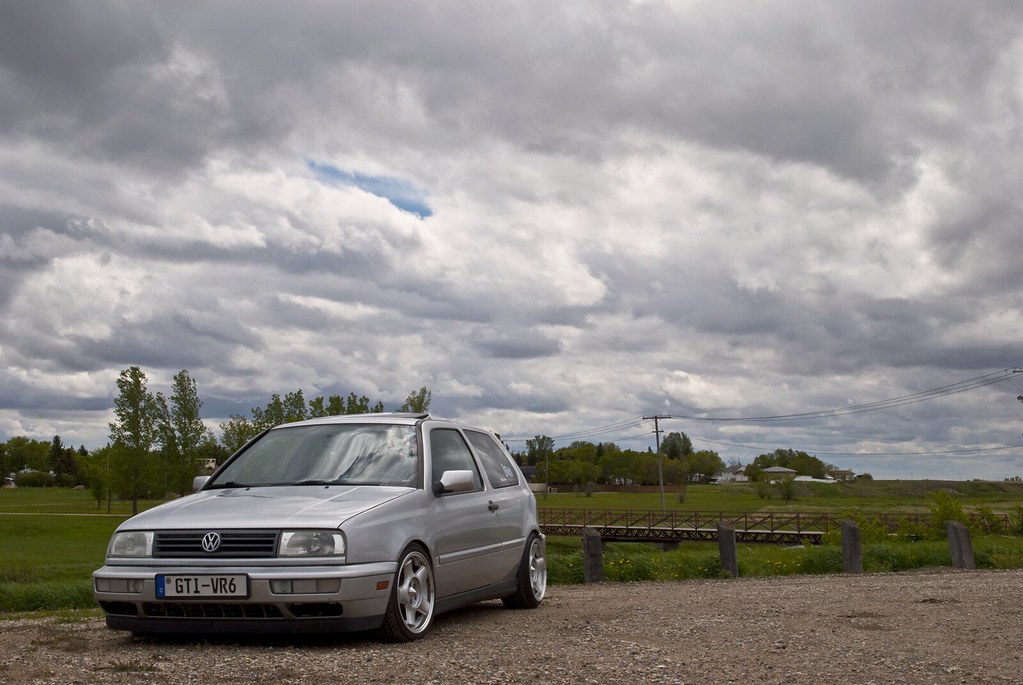
How I started with aperture settings, start with the lowest and work up. Review what each stop gave you with depth of field. Use your feet and change positions. When I see your first set, I see moving to the right, crouching, slightly tilting camera up and setting at 5.6 and lower. You'll get the tree contrast with a slight bokeh to make the car pop.

On the plus, I loved the D3000. Easy to use and allows you to really max out the settings and get your feet wet. Enjoy it!

Ok awesome! This is what I will work on now.

How do you know exactly what the pictures will look like? If my images are not clear enough, how will I know on a small LCD? Any tricks to that?
 
Use the zoom feature on the back LCD to check the focus sharpness.

Read your camera's users manual. It's on the White disc I'm told.

All digital images require some amoutn of sharpening in post processing because of the softness created by the anti-aliasing filter in front of the image sensor.

Most new photographes capture their images as JPEG image files which have had sharpening (and other operations) applied globally (to the entire photo) by the camera.

Many digital photographers capture their images in the RAW data format so they have complete control over sharpening, often only sharpening or post processing parts of an image (local editing).
 
Last edited:
Your first problem is the D3000 itself.

What is wrong with the D3000? From the reviews I have read they seem positive towards it. Comparable to the XSI.

The second thing is your ISO. 100 ISO isn't a good setting for....much of anything really. The object is to have your ISO at the highest set possible with little grain. A little grain/noise is a fine trade for clearer shots.
I thought iso 100 would give the least noise? I am taking the picture in a lighted condition as well, so why risk getting noise?

Now what you mean by 'super crisp' is unclear to me. You're using a kit lens at a distance in bad lighting.
I think I could do better than how my shots turned out. I have seen kit lens photos and a lot are stunning.


Don't listen to ivomitcats he does not know what he is talking about
 
Ivomitcats kind of knows what he/she is talking about and is on the right track, but still has some gaps in his/her knowledge and understanding of how it all fits together.
 
I already addressed altering the shutter speed.

Dear 'ivomitcats',

Raising your ISO degrades the quality of your images. What ISO changes is the light sensitivity of the sensor. It doesn't positively effect the image quality at all. Shooting outdoors, shooting on 100 is the best bet for image quality. So if you need to raise your ISO, that means that you can shoot at a faster shutter speed. Please stop being dumb and giving out inaccurate information. You've been told by several members (that VERY clearly know more than you about photography) that you are wrong.
 
How do you know exactly what the pictures will look like? If my images are not clear enough, how will I know on a small LCD? Any tricks to that?

I would review the picture and use the zoom function on camera and see if there is any out of focus. Using the larger apertures, you can see the depth of field on the view screen as well.
 
just fyi....
the 50mm 1.4 for the d3000 is not 125 dollars, you have to get the special auto focus one and it is almost 500 dollars.
 
He could get the 1.8 and manual focus it, but the lens lacks a focus motor and his body doesn't have one (not like a D-90).

I'm a little hazy on Nikon gear but I think lenses that are AF-S branded will autofocus on his body, like the 35mm (f/1.8 i think..).

Sorry your thread got all muddled up, OP.
 
the 35mm is 200 dollars at best buy. Is that comparable to a 50mm?
 
the 35mm is 200 dollars at best buy. Is that comparable to a 50mm?
No, there is a 15 mm difference. ;)

Or. Comparable in what way? Comparable to which 50mm?

The 35 mm is f/1.8. There are 3, 50 mm's:
  1. f/1.8 AF ($135)
  2. f/1.4 AF-S ($440)
  3. f/1.4 AIS MF ($500)
 
Critique this one please. I played with the aperture today and the clarity settings when importing the RAW in photoshop. It made the picture a lot cleaner.

4658101792_8d141dea6a_b.jpg
 
Bmilleker - I like the photo you posted above. Good contrast, color, and composition. I am not positive, but the horizon looks a little tilted, it may just be the contour of the land...

Overall, great work. Keep shooting and posting on here, and you will be taking great pictures in no time. Have fun!

-Andy
 
Put your camera setting on P (The dial at the top) This will adjust the aperture FOR you. And it does it properly. Having aperture automatic is really handy, because that is probably the number one thing you adjust the most in photos. It takes so much longer to adjust your settings than it does to take a picture. I dunno' about you, but I like getting a shot, not setting up my camera TO get a shot. That's not to say put your camera on auto either. (Auto is code for 'let's take a snapshot esque guess' and gives you no control whatsoever)

I can relate to why you say to let the camera do the aperture for you, but as we all know the camera basically takes a best guess. Learning how to put your camera in Aperture priority mode (or for that matter, shutter priority or even manual) truly gives the control to the photographer.

Also i think what you were trying to say about raising ISO increases sharpness is as follows.....
If you are ready to take a picture at lets say F/5.0, 1/30th and ISO 100, that the image may turn out slightly blurred (Due to the Low Shutter Speed). And IF you increase the ISO (As a result the shutter speed increases proportionally) you could increase the sharpness. So in this scenario by going to ISO 400, then the shutter speed would then go to 1/120th of a second, which will result in better sharpness. So its not the ISO directly that helps the Sharpness but the inderect result of the shutter speed increasing that helps the sharpness.

Had the scenario been F/5.0, 1/250th and ISO 100, then no increase in ISO would have helped the picture.......

Also remember one of the major uses for shutter priority mode, to blur the background of a a moving object. Same type of thing here, faster shutter = less blur.

Its all back to the basics of the exposure triangle......
 
bmilleker I like that photo you just posted. Very nice. The gray in the clouds compliments the car's color quite well. The background has a lot of crap in it and busy backgrounds can be distracting - something to keep in mind. Still like it though.

As far as the difference between a 35mm prime and a 50mm prime.. you can get both those focal lengths on your kit lens, so you'll know what to expect. The much larger apertures on those prime lenses will let you use the lens in very low light and get a very shallow depth of field, which is good for portraits and creative shots.

Looking forward to seeing more of your photos in the future.
 

Create an account or login to comment

You must be a member in order to leave a comment

Create account

Create an account on our community. It's easy!

Log in

Already have an account? Log in here.

New Topics

Back
Top Bottom