What's new

New to Photography. Thoughts on These Images?

Vistra

TPF Noob!
Joined
Jan 22, 2014
Messages
6
Reaction score
1
Location
United States
Can others edit my Photos
Photos OK to edit
Hey guys and gals,

I'm 17, and I'm just starting to get into photography. I recently received a Sony DSC-H9 camera as a hand-me-down. I've been testing it out, and I've gotten good feedback on my pictures, but I feel the quality of the actual picture isn't that good. I would like some opinions on (what I consider) my best images so far.
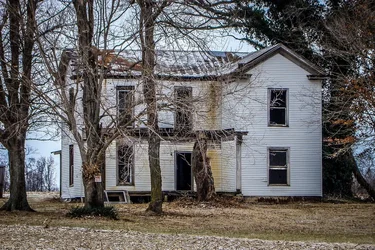
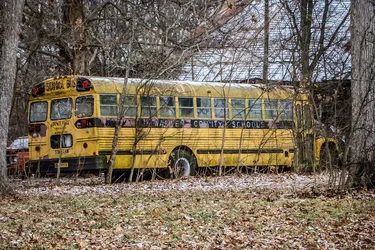
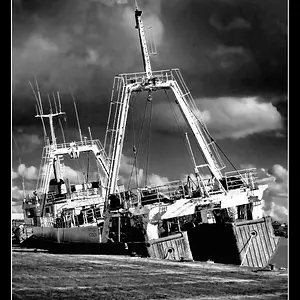
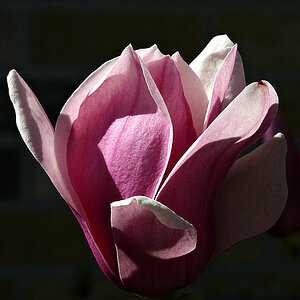
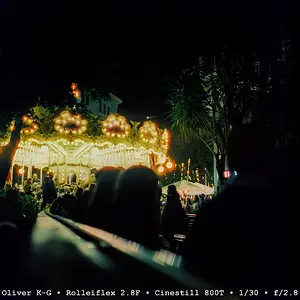
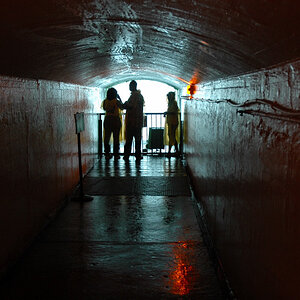
$12097381576_08aa5e22d1_b.webp$12097011493_9d59e2b44c_b.webp$12096737005_d761c92f56_b.webp$12096739695_0788303147_b.webp

I've literally only been using this camera about a week, so I'm fairly new to handling a camera like this. I guess I would just like some feedback on those images and some tips on what I can do to improve my photos.

P.S. I ordered some books Bryan Peterson and Scott Kelby to introduce myself to photography.

Thanks,

Travis (Vistra)
 
Last edited:
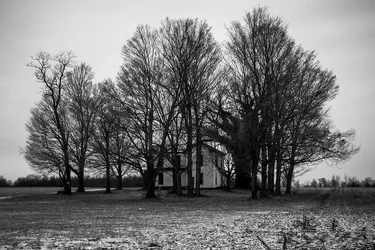
Good pictures..I just hate the trees interfering with the view of the house & schoolbus. Keep it up


Sent from my iPhone using Tapatalk
 
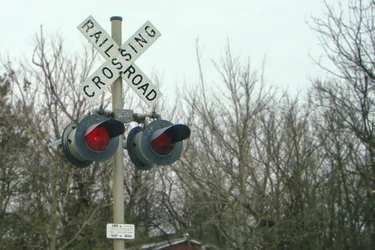
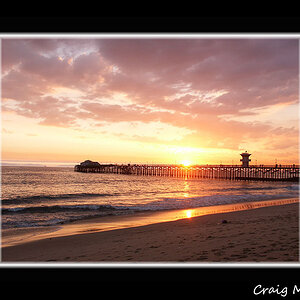
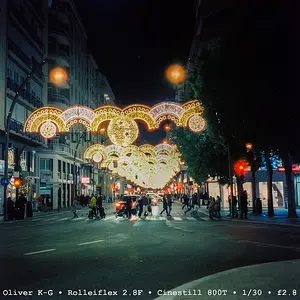
I like the BW one in the lower right., and the RR Crossing. IMO the top two are cropped/framed too tight, and just not ...interesting subjects.
 
Are there any specific tips to make sure my images are interesting? Honestly, I've only been doing "serious" photography for a couple of weeks.
 
Well, as Brandon mentioned, the trees obscuring the top two are one thing to look out for, especially since with the tight crop/frame there's no context for either subject. The RR Crossing is framed decently, but could have been shot from lower to add a little different perspective.
 
I like that lower right photo.

Bryan Peterson will help you for sure, he speaks in simple and comprehensive way.

Keep shooting! Photography is great :)
 
There are different kind of photographs. The most common are photographs of record - of a time, a place, a person, an event. They are meaningful to the photographer, form a visual memory, and usually to understand the meaning or significance, you need to know the context. They are usually only of interest to the photographer and perhaps close associates. Snapshots are an example of this type of photographs.

You also have "street", which is often a capture of some kind of "street life", usually showing people in the context of their surroundings. It becomes interesting to other viewers when it catches an incongruity or a "slice of life", or some aspect which elevates it from the level of the banal.

You have portraiture, which is usually done in the studio, but can also be seen in various settings. Here the focus is on the person or people, and the purpose is to reveal the person or show them in a good way. To be done well, this usually involves knowledge of posing, lighting, and careful preparation.

You have abstract, where it's more a study of lines, shapes, textures, colours, patterns. There are also lots of other genres. However, if you study the really good photographs, you'll notice that they are usually simple - with a clear subject, and non-conflicting/supporting background/foreground. That's the job of the photographer - to isolate an aspect that caught his or her eye, and construct the image (through framing, point of view, choice of focal length, depth-of-field) so that the viewer has the necessary clues to interpret the image. The biggest common problem of most beginning photographers is to not pay attention to the background and foreground - with the result that people have trees and poles sticking out of their heads, with no clue to the viewer regarding what to look at, what's important, or why the photographer took the photograph is the first place..

Look at the advice given by Lew (The Traveller) that I quote in my signature. That is a photographic master class distilled into three sentences. As for the books you're getting - they are good, and will help you with the technical aspects. But you learn and internalize the mechanics of photography, what should float to the surface is the awareness of the image as a language of expression. And simple and concise is usually better.
 
Are there any specific tips to make sure my images are interesting?

There are books on composition that will help, but if I am limited to one tip, I'd say; try to "see" a composition that almost nobody else sees and capture that. The photos in your post are fairly ordinary in terms of subject matter and composition, the one distant shot of the house in the grove comes the closest to being good, IMO.

Keep up the good work!
 
Are there any specific tips to make sure my images are interesting? Honestly, I've only been doing "serious" photography for a couple of weeks.
Pay close attention to light quality and direction.

Gain a good understanding of both the artistic aspects of making visual images, and the technical aspects of doing digital photography.
Digital Photography Tutorials
Composition and the Elements of Visual Design
Guidelines for Better Photographic Composition.
Photography Composition Articles Library
 
The people metioning the trees are not "seeing" the trees for what they ARE. The trees represent a distancing, an alienation, a feeling of decrepitude. The abandoned house, surrounded by leafless,winter-time trees...the abandoned school bus, surrounded by leafless, wintery trees...these photos convey distance/inapproachability/decline/loneliness/desolation. I'm surprised people do not "get" that, but want to pigeonhole the image of a school bus into some always and forever-happy-happy, smiling kids kind of thought, and an abandoned farm house is supposed to be represented like it's The Walton's Farm...

Your pics show distance and neglect, and project a feeling of neglect and decline. Not really the kind of happy-snaps most people expect. The railroad crossing shot is very weak. You are working in a very detached, documenting type of style. Most people loathe that.

Keep shooting, keep looking, keep trying to see. Just keep at it.
 
The only thing that I would comment on to add to what has been said is this. On the first one, did you check for the building being straight vertical? I can't tell, but the foreground gives it the feeling of leaning like it's going to slide off the page to the lower left.
 
My favorite shot is the one in the lower right corner.

When I evaluate a shot I have taken, I ask myself these questions:
1) Would I hang it on my wall? (or would my client if its a portrait)
Why/Why not?

2) Would I add it to my portfolio?

If the answer to both of these questions is no, then I consider the shot to be either a weak shot or one that has only personal meaning/interest.
Of course I also ask a lot of other questions but these are the first ones I ask myself when doing self evaluation.
 
This camera is fine for what you are doing for now. You can upgrade to something better later if you stick with it.
 
Are there any specific tips to make sure my images are interesting? Honestly, I've only been doing "serious" photography for a couple of weeks.
Pay close attention to light quality and direction.

Gain a good understanding of both the artistic aspects of making visual images, and the technical aspects of doing digital photography.
Digital Photography Tutorials
Composition and the Elements of Visual Design
Guidelines for Better Photographic Composition.
Photography Composition Articles Library

Just what i needed.


Sent from my iPhone using Tapatalk
 
Think about what you're seeing in your viewfinder before you release the shutter. Move around and see how the image changes as you change your vantage point, and think about what looks most interesting.

The first two are scenes that have potential as interesting photos, you may not always want to shoot looking straight on. Maybe there would be some features of the abandoned house that could look interesting up closer if it's possible to move in. Try moving in and/or moving back or to one side to see if you get an interesting perspective. The RR sign photo has the top edge of somebody's roof that you don't need at the bottom and I agree, framing it a little higher might have worked better. The last one might have worked as a vertical shot with some foreground showing and more height to the trees.

Take time to see what you're looking at, and spend some time just looking around thru your viewfinder/at your viewscreen. Think about what's interesting about what you're seeing, and what would you want the viewer to see?
 

Create an account or login to comment

You must be a member in order to leave a comment

Create account

Create an account on our community. It's easy!

Log in

Already have an account? Log in here.

Back
Top Bottom