What's new

Noob To The Core!

jrasche2003

TPF Noob!
Joined
Jan 7, 2013
Messages
41
Reaction score
4
Location
United States
Can others edit my Photos
Photos OK to edit
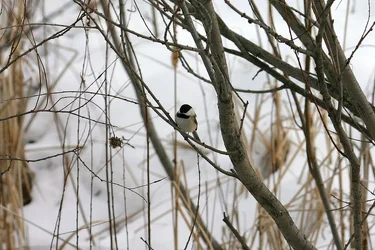
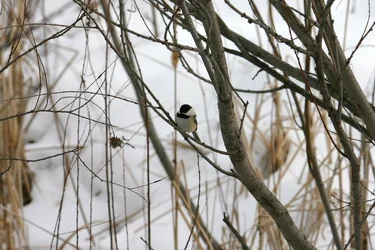
So, I apparently really need to learn how to mess with my own settings rather than using the camera as a point and shoot. Case in point. I went for a walk on lunch today (brought my new obsession to work). There is a small nature preserve so I thought it would be fun to see what I could find. I love birds, and I thought it would be fun to takes some photos.

Now as the lunch progressed I realized that the only way I am going to get super close up of the birds is if I buy a 500mm, which I don't have the budget for. So that first off is a reality I have to face. Bums me out, but it is what it is.

But I get home tonight and I am honestly disappointed! Granted I realized that living in Minnesota in the winter was going to give me some very blah pictures since everything looks dead, but I didn't expect the pictures that I did take to turn out so bad. And I think I know why. My assumption is that the white of the sky caused the auto metering to adjust to it, thusly making my birds too dark? That sucks. Now I have to figure out how do I adjust for this, and meter correctly, and still be able to snap these critters that do not sit still.. will I even be able to do it?

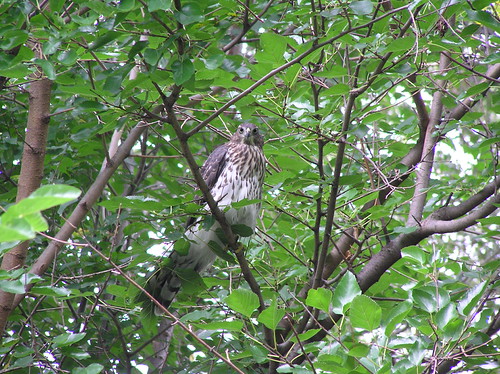
Then the other disappointment is the lack of detail in a picture of a hawk I took.. am I to assume that this too was because of the metering, or am I expecting too much from my zoom?

I appreciate any help you want to offer, and I will take any and all advice. I love this too much to give up, and now that I have a digital camera I think I am willing to go through the motions more, because I am not throwing away film like crazy! (This is what I did when trying on the 35mm SLRS).

Thank You!! :mrgreen:

8362223385_387024d6b9_c.jpg
8363287048_fdf3ac9e71_c.jpg
8362228801_1ccbdcbc85_c.jpg
8363292754_0044d2b646_c.jpg
8363294188_b5ba66d9e5_c.jpg
8363294962_be8264220d_c.jpg
8363295628_1ea15beacd_c.jpg
8362225529_42ecdfbd0c_c.jpg
8362223559_4e0144f64a_c.jpg
 

Attachments

  • $8362223385_387024d6b9_m.webp
    $8362223385_387024d6b9_m.webp
    22.4 KB · Views: 177
  • $8362223385_387024d6b9_c.webp
    $8362223385_387024d6b9_c.webp
    107.7 KB · Views: 107
  • $8362223385_387024d6b9_b.webp
    $8362223385_387024d6b9_b.webp
    128.3 KB · Views: 103
Sucks that my post got moved.. hopefully someone will still help...
 
Got some bull's eye fever.

(If I put my finger on the screen on your subject, and scroll the mouse wheel... it will hit each subject in the next photo. :D )
 
Got some bull's eye fever.

(If I put my finger on the screen on your subject, and scroll the mouse wheel... it will hit each subject in the next photo. :D )


Ok.. so is this the reason for my poor lighting/focus? Or are you just pointing out this error? I guess I do see your point. I am new guess it's something to learn.
 
What he is pointing out is that for the most part you have put your subject directly into the center of your photo. It's a composition thing. A good search would be composition search on google.
As for exposure, I would suggest that you invest in the book Understanding exposure by Bryan Peterson. it is a great book and will really help you in all of your photography not just birding.
IMO, you are expecting way too much out of a 35mm lens. That is not going to get you nearly close enough to capture the detail that I think you want out of your hawk photo. I have a 500mm and wish I had more.
 
Ahh welcome to the forum and welcome to the world of birding. I remember that feeling about a year and a half ago. I have a camera, oh I like birds. Oh wow, why are the birds so small in my picture. Wow, they are not very sharp. Well, I spent 3 months learning the basics. Then I got a 70-300 lens. Then I spent 3 months frustrated, Then I got a different body, Then I got a 200-400 Then I spent a few more months frustrated and spent more time learning. Then I got a 200-500, Then I got another body, Then I spent a few months learning. Then I started to get pictures. Then I spent more time learning. Then I bought camo, then I learned how to observe birds and get closer.

See the common thread here. Bird photography is one of the toughest areas to get good at. You can't control the lighting or the subject or the weather. Besides gear it takes a huge block of time to learn how to use your camera and a bigger block of time in the woods or wherever birds are. It has to become second nature when to use spot or matrix metering, how much exposure compensation if needed, focus modes, iso and on and on.

I'm not trying to sound negative, I'm just trying to tell you some of the lessons I have learned the hard way. Besides the deer, exposures don't look too bad. You will need a longer lens. Composition has to be learned. I almost always use my center focus point, but it about cropping and how you present your final image. I have a friend that has an e-book about photography that covers so many levels of photography that it is worth the 9 bucks or whatever it is on amazon. Google Tony Northrup Stunning guide to digital photography.

If you want to see my work here's my flickr.. Flickr: krisinct's Photostream
 
I'm not a birder myself, but there are a few tricks that they use. In some nature preserves you actually can get fairly close. I've got one near me where you can sprinkle some bird seed in your hand, hold steady, and they'll come to you and land on your finger! (these are wild birds -- but they live in a preserve where they've learned they have nothing to fear. They are a bit skittish... if you move they'll fly away quickly.)

Some photographers will set up a blind. But I did see one who posted a video on his technique... he built a perch by using some natural branches. Set them in the lighting he wanted to use. Put his camera on a tripod pointed at the perch where he expected the birds to land. Used a radio wireless trigger to take the shots (he was hidden far enough from view). Then (and this was the cool bit) put a speaker below the perch which played the mating call of a female of whatever bird he was hoping to attract. The males would fly up, land on his perch and try to figure out why they couldn't find the female even though they could hear her. Meanwhile... the photographer would click away!

The birders I know tend to prefer a focal length of about 400mm ... give or take a bit. Some will use a telescope instead of a lens. You can check out Birdscope.com (which I think is actually a TeleVue website.) TeleVue makes VERY VERY high end telescopes. They don't look much different than your average scope, but... these are not your garden variety refractors. A TV-76 is about $2k (480mm f/6.3). These are APO's (apochromatic refractor telescopes). They use a special configuration of optics to keep chromatic aberration to an absolute minimum and have breathtakingly sharp views.

For example, the images on this page Tele Vue Optics: TV-76: Todd Carlson's Nature Images were taken with a Canon 300D (your camera I think).

A TV-60 is about $800 and it's a 360mm f/6. You can see examples of it's images on this page: Flickr: tbtalbottjr's stuff tagged with tv60 That's not bad considering you could never buy a lens with that focal length and quality for the same price. Canon's 400mm f/5.6 lens is about $1300. Granted the Canon lens can auto-focus and you can adjust the aperture... you can't do that with the scope, but you certainly *can* rival the image quality. It also means you're somewhat restricted in shooting circumstances. You wont be capturing birds in flight -- for that you'd need an auto-focusing lens and that means investing a bit more.

Just keep in mind it's NOT just the gear. These guys have developed some techniques for capturing these shots.

As for the bulls-eye comment... it means your centering everything. You can artfully compose a subject off-center and it forces the human eye to pan across the image... it's not our natural way to look at things and because it's different and forces your eye to wander, it tends to look more interesting.

Pick up a copy of Michael Freeman's "The Photographer's Eye - Composition and Design for Better Digital Photos". This isn't a book on exposure... it's a book on composition. You should understand the fundamentals of exposure before moving on to composition.
 
^^What those guys said! It's not all in the gear, though longer lenses are certainly helpful if you can afford them.

A BIG part of it is learning how to be the bird hunter/whisperer that can get close enough to them to get the great shots. Camouflage, blinds, remote shooting with tripod and remote shutter trigger, speedlights, bird songs played on (insert device here) to bring them in, seed-baited perches, a LOT of patience, etc., are all helpful techniques employed by those that are getting the great shots. As Coastalconn said about his own experiences, it takes some time to learn and then master that craft, but if you're into getting great bird shots, it'll be worth it in the end. Coastalconn's bird shots are outstanding and sometimes downright amazing, so definitely listen to what he has to say on the subject!!
 
I really really appreciate all the comments, constructive criticism and pointers from you all! I am able to step back and truly understand your points fully. I am jumping too quickly, and getting disappointed and frustrated without giving myself enough time to learn. I mean geez, I just got the camera on Saturday, and even though I worked with film 35mm SLR's in the past, I truly didn't learn because I got tired of burning film up. I think some of my enthusiasm is because I just bought the camera body used, which is mine now, but the lens I have 30 days to return if I don't like it. And because it is Winter in Minnesota, I picked the worst possible time to try and use it in my opinion. Not much to take pictures of outside right now. And what I mean by that is, one of my favorite all time things to photograph is close up photography of insects. I remember the first roll of film I got back after shooting photos of dragonfly's, small honey bee's and a cicada with my Mamiya DTL1000 w/ my 85-205 vivatar zoom lens. When I saw the detail come back in the wings, things that I didn't see with my naked eye, I was so awe struck, and thus the close up obsession started. I did do a little close up with my Olympus C770, but it just wasn't like an SLR. So I guess I am struggling to find things to photograph right now. No flowers, no bugs. Just dead white landscapes, maybe a few critters here and there.. and heck the birds even seem scarce, and they are busier than in the spring. I have what it seems like 6 more months until I can start looking for that stuff.

When I went into the camera store, knowing that the lens really is the most important part of photography,I asked not for top of the line, not bottom but midrange telephoto. He gave me the Canon 55-250mm EFS lens. It seems the reviews are decent on this lens.. what do you guys think? Should I hang on to it?

I am most definitely going to check out the book on exposure as I don't want to be in the 'point and shoot' mode forever. I want to have some control over the photos.

Again, thank you to everyone that commented! It is truly appreciated!

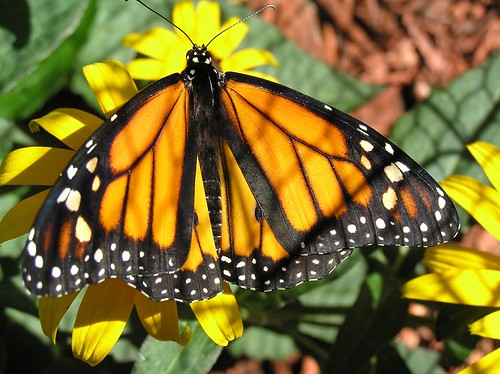
Here are some of my favorite photos, done with that Olympus C770. I do see that again, everything is bullseyed. ha.. Something to definitely work on. I think they are decent photos, but I know that an SLR could probably do even better. But I think that is really more dependent on me. :)
-Jess
2219401589_8d96333546.jpg
2219408503_faaed0c4b5.jpg
2220206386_0bbc0d5276.jpg
2219411709_4a26ccda8c.jpg
 
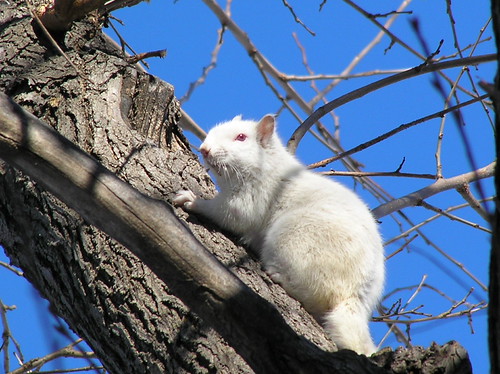
This last group is nice. The butterfly is fine since it fills the frame. I also like the first one (albino squirrel?) as well - the limb cuts through the frame diagonally.
There a number of indoor exercises to try as you learn the basics.
 
I think that I will do just that. Work indoors and try to work out some bugs, read and experiment! Thanks for the kind words.. and yep that is an Albino.. I had just gotten that Olympus C770 when I saw him up there and quick grabbed the shot. Was very happy with the quality of the photo, but that camera has limitations and over time I think the quality of pictures is suffering. :)
 

Create an account or login to comment

You must be a member in order to leave a comment

Create account

Create an account on our community. It's easy!

Log in

Already have an account? Log in here.

New Topics

Back
Top Bottom