What's new

Outdoor Photoshoot w/ a Baby

KC22

TPF Noob!
Joined
Apr 1, 2012
Messages
16
Reaction score
0
Location
California
Can others edit my Photos
Photos NOT OK to edit
I recently purchased the Nikon D3100 DSLR camera with the 18-55mm VR lens as well as the 55-200mm VR lens. A friend of mine has asked me to do some pictures of her 8 month old son at a nearby park. I am very new to photography and up until this point my only "model" has been my 1 year old daughter. I'm very interested in getting started with photography, mainly as a hobby, but would at some point in the future like to do it as a side job. I am still learning the in's and out's of my camera and how to adjust all the settings so that the pictures do not come out too white or too dark.

I don't currently have any extra money to invest in lighting, backgrounds (for indoor shoots), or other lenses. Is there any advice that anyone can offer me on how to make sure the pictures come out decent?

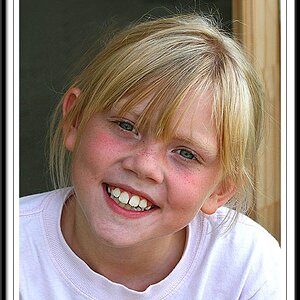
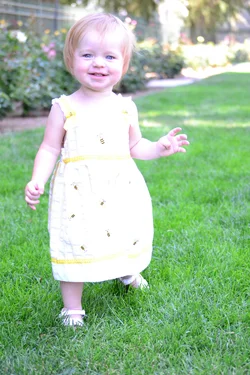
If it works, I've attached a recent picture of my daughter to show how I (clearly) have not yet figured out the proper settings for my pictures.
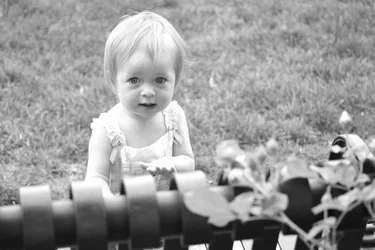
$fairmount 018.webp
 
Welcome to the forum and the obsession we fondly call the hobby of photography! There are a ton of things you can to make sure that your pictures turn out the best they can. The most important one is read! Read the camera's manual (The big one on CD, NOT the little 'quick-start' guide) as well as tutorials. I like Cambridge in Colour, but there are lots more, and YouTube has a wealth of information too!

You've probably noticed that in the image you have posted there is a lot of missing detail in the white areas. This is because while the camera is "smart" it's not very smart, and when it 'looked' at the scene, it was fooled by all of the bright areas. You need to understand such things as how your camera's light meter works and how to adjust settings to avoid that problem ... did I mention 'read'?

Good luck!
 
I pulled up the file info and this is what it says:

Lens: 55-200mm VR
Aperture: f/4
Shutter Speed: 1/400s
Exposure Comp: +1.7EV
Metering: Matrix
ISO Sensitivity: ISO 1600


Here is another picture I took during the same shoot.
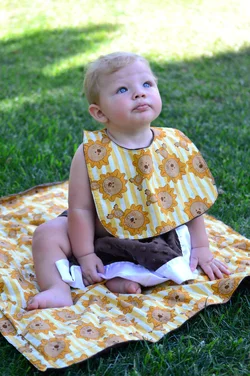
$fairmount 026.webp


File Info:
Exposure Comp: +1.0EV
Metering: Matrix
Aperture: f/4.2
ISO: ISO 3200
Shutter Speed: 1/640s
 
Welcome to the forum and the obsession we fondly call the hobby of photography! There are a ton of things you can to make sure that your pictures turn out the best they can. The most important one is read! Read the camera's manual (The big one on CD, NOT the little 'quick-start' guide) as well as tutorials. I like Cambridge in Colour, but there are lots more, and YouTube has a wealth of information too!

You've probably noticed that in the image you have posted there is a lot of missing detail in the white areas. This is because while the camera is "smart" it's not very smart, and when it 'looked' at the scene, it was fooled by all of the bright areas. You need to understand such things as how your camera's light meter works and how to adjust settings to avoid that problem ... did I mention 'read'?

Good luck!

Thank you! I have read the manual (the quick-start guide) as well of briefly looked at the manual on the CD. I also just recently watched the tutorial CD that came with the camera. I've just been playing around with the settings because even after reading what little I have read, I think I need to play with the settings and see the results I get in order to fully understand how the different settings work. Thank you so much for your advice :) It is greatly appreciated!
 
KC, one of the best books I've read is Understanding Exposure, by Bryan Peterson. He covers the exposure triangle in detail, and does so in a way that's at least moderately entertaining and memorable. I definitely recommend it.

Two things about your current settings scream at me:

1st, for daytime outdoor shooting, your ISO's are WAAAAY too high. In bright sunlight, with relatively slow moving subjects (i.e. not pro-sports), you should be down around ISO 200. If it's partly-mostly cloudy, you might get up to ISO 400/800. The only time I'm above that is dusk/dawn or some combo of clouds and fast motion.

2nd, your apertures are awfully wide. In other words, if you've got plenty of light, and you're just starting to learn, try keeping aperture at least 2 full stops above wide open. In other words, if your lens goes to f/1.4, don't shoot any wider than f/2.8. If the widest your lens goes is f/2.8, don't shoot any wider than f/5.6. You can definitely relax this as you learn, but a common beginner mistake is to shoot too wide open.

Good luck! Keep shooting, and keep posting!
 
Turn the exposure compensation back to zero. You don't need it Thinking it needs to up the exposure any more.

Shoot about an hour before sunset, with the sun *behind* your subject. Use a reflector or white foam board to bounce light onto the baby. This should give you good soft golden light without harsh shadows and blown out brights.

(The sky was completely overcast last night, so I didn't get the beautiful golden sunshine, but it did provide a soft diffuse light that worked well. The tilt is intentional, and this is a low-res image just to illustate lighting conditions).


i copy by awaagen, on Flickr
 
Last edited:
KC, one of the best books I've read is Understanding Exposure, by Bryan Peterson. He covers the exposure triangle in detail, and does so in a way that's at least moderately entertaining and memorable. I definitely recommend it.

Two things about your current settings scream at me:

1st, for daytime outdoor shooting, your ISO's are WAAAAY too high. In bright sunlight, with relatively slow moving subjects (i.e. not pro-sports), you should be down around ISO 200. If it's partly-mostly cloudy, you might get up to ISO 400/800. The only time I'm above that is dusk/dawn or some combo of clouds and fast motion.

2nd, your apertures are awfully wide. In other words, if you've got plenty of light, and you're just starting to learn, try keeping aperture at least 2 full stops above wide open. In other words, if your lens goes to f/1.4, don't shoot any wider than f/2.8. If the widest your lens goes is f/2.8, don't shoot any wider than f/5.6. You can definitely relax this as you learn, but a common beginner mistake is to shoot too wide open.

Good luck! Keep shooting, and keep posting!


Thanks for the tips about the ISO and apertures. I've been setting the aperture to as low as the lens will allow because I like blurred backgrounds and don't know how else to achieve that effect without the low aperture. Can I ask, why is shooting "too wide open" a mistake? I'm not sure I fully understand what you mean by the aperture being wide.


@ Medic, I don't have a reflector or white foam board but I will be sure to look into somethings along those lines in order to bounce light. It just seems that whenever I don't have the ISO set higher, the pictures come out really dark. I know this is probably an easy fix, just not one I have figured out yet.
 
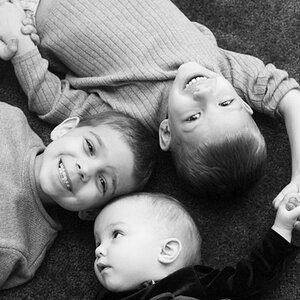
Here's one I did of a friends little boy.

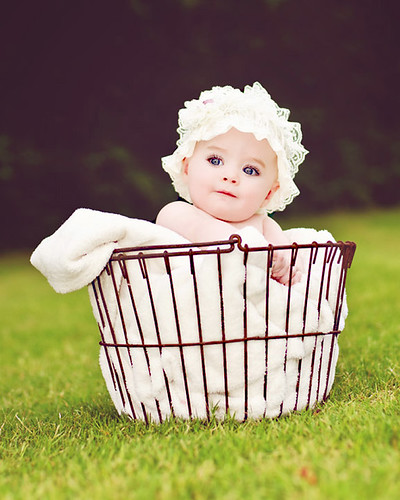
$new! 124.webp
 
Nice rule of thirds - but the photo is very blown out. If you shot in RAW, you can usually save the photo with some adjustments. Also, the first thing I look for in people is perfect focus of the eyes, and it's a little off. Practice makes perfect though!
 
Nice rule of thirds - but the photo is very blown out. If you shot in RAW, you can usually save the photo with some adjustments. Also, the first thing I look for in people is perfect focus of the eyes, and it's a little off. Practice makes perfect though!

Stupid question, but how do I make sure the camera is focused on my subjects eyes?
 
Shooting "wide open" means you're shooting at the widest/most open aperture your lens allows. The reason this is "usually" a mistake is that all lenses, even the high-end pro stuff, lose sharpness at their extreme apertures. It's a common mistake for beginners because everyone is chasing that blurred background, which is partially controlled with aperture. Most of the time, you'll still get the effect you're looking for 1-2 f/stops up from "wide open," and shooting there will give you better sharpness. (full stop numbers for aperture are 1, 1.4, 2, 2.8, 4, 5.6, 8, 11, 16, & 22. If your lens is wide open at 1.4, 1-2 stops up is 2-2.8)

Getting your focus locked on the subject's eyes takes learning your way around your camera and practice. If you're shooting a pretty stationary subject, you can put your camera in single-focus mode, center the auto-focus target on one of your subject's eyes, and press the shutter release half-way. While still holding the shutter release half-down, shift the camera to put your subject where you want them in your frame. (this is called re-composing) Now press the shutter release the rest of the way to take the picture. Your focus will stay lock on whatever you aimed at when you pressed the release half-way until either you let go or take the shot.

If your subject is moving, things get a bit trickier. You'll want to be in continuous auto-focus and you may need to change your AF point to something other than the default. Better to learn with things that don't move too much and go from there.
 
He looks very cool (blueish tint to the pic- from white balance not being set or corrected properly).

Put your ISO all the way back down and use your flash to illuminate subjects in the shade. This will allow you to use a higher shutter speed (if your pics are too bright, step your aperture down and/or up your shutter speed). The image I posted was shot at dusk and (I think) I had to use my speedlight to keep her eyes from being dark blobs of nothing. (I had to use my flash for most of the shoot, but can't pull up the exif data for that shot at the moment). Anyway, using your flash in the shade and a faster shutter speed with lower ISO and smaller aperture (to increase your sharpness) will help.
 
Nice rule of thirds - but the photo is very blown out. If you shot in RAW, you can usually save the photo with some adjustments. Also, the first thing I look for in people is perfect focus of the eyes, and it's a little off. Practice makes perfect though!

Stupid question, but how do I make sure the camera is focused on my subjects eyes?

This response is spot on :)

Getting your focus locked on the subject's eyes takes learning your way around your camera and practice. If you're shooting a pretty stationary subject, you can put your camera in single-focus mode, center the auto-focus target on one of your subject's eyes, and press the shutter release half-way. While still holding the shutter release half-down, shift the camera to put your subject where you want them in your frame. (this is called re-composing) Now press the shutter release the rest of the way to take the picture. Your focus will stay lock on whatever you aimed at when you pressed the release half-way until either you let go or take the shot.

Also MF works
 

Create an account or login to comment

You must be a member in order to leave a comment

Create account

Create an account on our community. It's easy!

Log in

Already have an account? Log in here.

Back
Top Bottom