There's no problem whatsoever in mixing bodies, such as a FF with a 1.5x; they both take the same lenses,and today's Nikon batteries offer incredible life. Battery life is no longer a worry, like it was back in the D1 days. I see the OP has no speedlight listed...many times you will need supplementary lighting to get the kind of DOF/image quality that most editors want for color.
If I had to use a D60, I would want a faster lens than the 18-55, like the Tamron of roughly the same length,but with an f/2.8 maximum aperture. The 55mm f/5.6 maximum aperture limitation of the 18-55 kit lenses is just way,way too slow for indoor photography unless you're using flash.
A good, fast prime lens like the 35mm f/1.8 DX lens would be useful, and the 85mm f/1.8 AF-D is a good Nikkor lens to have for many indoor events. Myself, I would be greatly tempted to ditch the D60 in favor of a body that is a bit faster in operation and which has more compatibility with the entirety of the Nikon lens lineup.
Being limited by the f/5.6 maximum aperture of consumer-level lenses means you'll need flash under many situations where with faster glass you could shoot ambient light.
In my book f/2.8 is not exactly "fast",since f/1.4 and f/1.8 and f/2 primes exist at 28,35,50,85,105,135,and 200mm. Since you're a beginner, I'd say buy the two most-affordable fast primes, the 35mm 1.8 and the 85mm 1.8,and see what having a FAST lens can do for you. However, compared with the f/5.6 limitation you're under now, even f/2.8 zooms are relatively "fast" lenses.
As soon as you can afford it, try and move to a D700 or other killer high-ISO body. The elevated ISO's of the D700 and D3 are incredible,and in my day we would have absolutely killed to have had the ISO 1600 and 3200 capabilities of a D700. Maybe by the time you're ready for it, used D700's will be really affordably priced.
My advice would be to ask other,more-experienced shooters for a bit of guidance. You'll probably see that many of them are using older, less-high-end Nikon bodies, often with the old 28-70 AF-S on there, while more established and better-payed guys have the new 14-24 and 24-70. Knowing where to stand is more important than what you're shooting,and making sure you work around/not in conflict with the TV crews and other shooters at crowded events is important; being a PJ is not being a low-rent Los Angeles pap. You need to learn how to act professionally and dispassionately and to get the shots you need, while being sensitive to your subjects and their situations.



 (Perhaps it's to keep the hood from falling off if it's jostled? The hood on my 24-70 has a tendency to come a little loose sometimes.)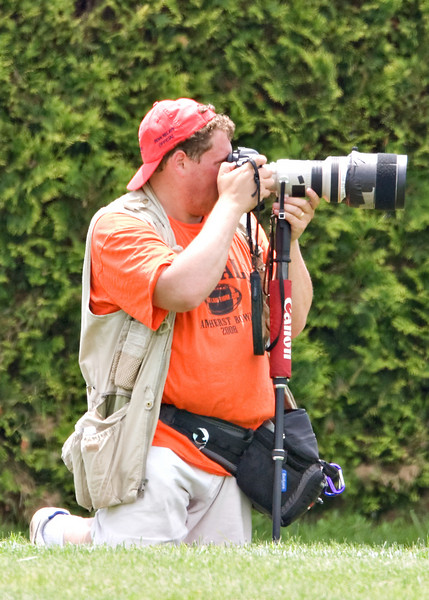



![[No title]](/data/xfmg/thumbnail/39/39497-93752210dd49247220721e5ac8c61245.jpg?1734173613)
![[No title]](/data/xfmg/thumbnail/37/37605-90c8efaef5b7d1f52d4bf8e7dfd33673.jpg?1734170732)
![[No title]](/data/xfmg/thumbnail/37/37603-739c5d9b541a083a12f2f30e45ca2b7b.jpg?1734170731)