What's new

Controlling Background Chaos

Farmclicker

TPF Noob!
Joined
Aug 6, 2012
Messages
82
Reaction score
15
Location
Maine
Can others edit my Photos
Photos OK to edit
I have taken a few photos out in the woods and it is always a hit or miss kind of thing, I live in Maine and so the forest here are very thick. This tends to make the backgrounds look chaotic with trees, brush, dead fall, etc.

As a farmer logging is just part of the job and lately (with commodity prices so low) I have found myself doing a bit more logging then I want in order to squeeze by. I am about to harvest some rather big White Pine that I have been saving for the last 30 years or so and thought the moment should be captured on film. I was thinking of getting dressed in period clothing from the 1930's and doing a depression era style photo shoot complete with axe and cross cut saw that I have kicking around. This means a lot of black and white photos where background chaos can really make or break the success of the photo.

Since harvesting trees this big is rare, I cannot recreate this photo shoot again and again. How do you decide how much mess is/is not acceptable in the background? Would wearing a plaid shirt be too "busy" for a black and white photo and ruin it? And what sort of posses and photo types would you suggest I take? I know in the depression era the loggers were typically posed because of the long dwell times of the camera back then.

I guess I am trying to do a perfect photo shoot on a once-in-a-lifetime timber harvest and yet as a very inexperienced photographer, know the chances are very slim I could pull this off. :-(

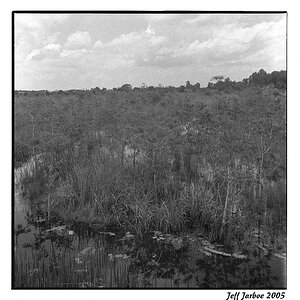
Here is an example of the background chaos my woodlot consists of...just so you can know what I am talking about and trying to control.

[IMG
] Beauty and the Beast by Plowpoints[/IMG]
 
Pretty much identical to our forests here on the west coast of Vancouver Island. I wouldn't worry about the background clutter as long as it's appropriate. Take a look at the Google Image search here and you will notice a couple of things: One, they had LOTS of DoF in their shots and two, they didn't worry too much about 'prettying' things up. I wouldn't wear plaid, not because it won't photograph well, but because it wouldn't be appropriate. Depression-era loggers were poor men for the most part, and they didn't spend a cent more than they had to on clothing. Plaid was more expensive, and NOT considered a "working cloth" at that time. You will HAVE to find yourself some button-on suspenders and a nice old beat to Hades felt hat (no friggin' hard-hats for those men!), and if you can "make" collar-less shirt, even better (The 30s might be getting a bit late, but shirts with separate collars weren't uncommon and loggers are soften seen wearing the shirt 'sans' collar. For the ultimate in realism, make yourself a pair of tin-pants; since they didn't have the fancy rain-gear of today, they would often take a pair of regular work-pants (usually heavy wool, but jeans will work) and ironed paraffin into them 'til they were water-proof. This is why you so often see them looking rather stiff.
 
Last edited:
Think in terms of separation or isolation. Separating and isolating your subject from the background.

Separation is often achieved by using the technique known as selective focus. Selective focus takes advantage of a shallow depth-of-field (DoF) by having the subject sharply focused while the background is an indistinct, preferably smooth and creamy, blur.

Controlling DoF is more technically involved than many new to doing photography realize. Image sensor size, lens focal length, point of focus distance, lens aperture, and point of focus distance to the background all factor into how far from the camera the zone of selective focus is (DoF).
Learn Photography Concepts

Separation and isolation can also be accomplished with light. In the visual arts world there is a homily that says 'light advances, dark recedes'.

The human eye usually first goes to the brightest parts of an image. So by making your subject brighter than everything else in a photo you again achieve separation and isolation.

Something as simple as adding a vignette, or as advanced as using several supplemental, modified light sources can separate image elements in a scene, even if they are part of the background.
 
I grew up in a couple of mill towns where logging was the norm, and had been for literally decades...there were LOADS of old logging photos around...most loggers wore suspenders and plaid flannel shirts, since logging was mostly restricted to the better-weather months in the spring, summer, and fall when the ground was not too soggy to yard logs off the slopes using "logging donkeys" (stationary engines that ran the winches that actuated the cables to pull the logs to the landing area). There usually was a background of "woods" behind the loggers...but back in the olden days, DOF was rather shallow, since the majority of the shots were made on 4x5 cameras, or larger, and film that large does NOT give a lot of depth of field per picture angle...

To best recreate that vintage feel, you probably ought to consider using a 4:5 or 5:7 aspect ratio for the images you make....the long, skinny, narrow 3:2 ratio of modern d-slr captures does NOT look "old-timey"...you want a more-squat aspect ratio....again, 4 to 5 or 5 to 7 ratio!!! As far as the wooded look with ferns and blackberry and such...ehhh...I wouldnlt sweat it too much....and if you DO, there's always a Weed Eater....or if you wanna be "authentic", you could always trim the weeds and vines back with a machete or a hand scythe!!!
 
...To best recreate that vintage feel, you probably ought to consider using a 4:5 or 5:7 aspect ratio for the images you make....the long, skinny, narrow 3:2 ratio of modern d-slr captures does NOT look "old-timey"...you want a more-squat aspect ratio....again, 4 to 5 or 5 to 7 ratio!!!
Excellent point Derrel!
 
Wow, thanks guys, I never realized there was so much involved in getting a narrow depth of field. It will certainly be a challenge that is for sure because I am not working with much; pretty much a point and shoot camera mounted on a tripod and its timer settings. The timer settings are what is tricky because there is not much to focus on if you are behind the camera when you set everything up but there may be some work around's for that.

Thanks so much for the ideas. I really want to get working on this because it is starting to get cold out now (you could see your breath yesterday morning because it was in the 50's), but today is the first day of school and I got 3 daughters ages 5,6,7 to get off to school and a host of farm work to do, so it might not happen this week. Such is life on the farm, mostly its about work and seldom getting to play.

Thanks again for your comments and I am doing intensive study on Depth of Field to get a better grasp and how I can adjust my point and shoot camera accordingly.
 
A longer lens will not only provide less DOF but also has a narrower angle of view, making it easier to change your position slightly and push some of the more distracting stuff in the background out of the frame.
 
If subject scale in the image frame, and lens aperture is kept the same using a short and a long focal length lens, the DoF each lens produces is virtually identical.

To keep the subject scale the same the focus point distance of the longer lens is greater which is what makes the DoF the same.
 

Create an account or login to comment

You must be a member in order to leave a comment

Create account

Create an account on our community. It's easy!

Log in

Already have an account? Log in here.

New Topics

Back
Top Bottom