What's new

Depth of Field questions..

DimaKuks

TPF Noob!
Joined
Dec 20, 2014
Messages
1
Reaction score
0
Location
Seattle
Can others edit my Photos
Photos OK to edit
ive always been interested in photography, so i recently decided to start and got myself a new Canon 60D, a full kit that was barely used for about half of the price than it would regularly cost.

it came with an 18-135MM lens and i like it, photos turn out nice and everything..

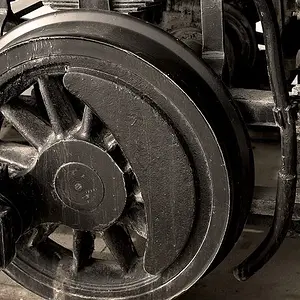
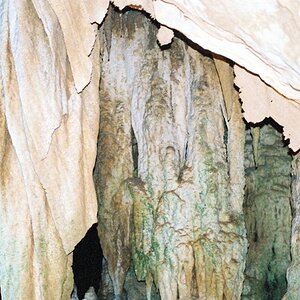
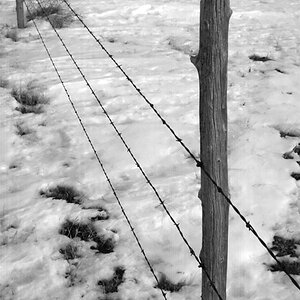
but ive been trying to take photos similar to these:

Please do not post images to which you do not hold rights. You may post links.

with my current lens, i cant seem to get this kind of depth of field, and i really want to take photos like these.

does anyone know if my lens can do this?


i heard that photos like this come from macro lenses, and i would love to get one, i just don't know which kind can get effects like these, and i would love some pointers! thank you in advance!
 
Last edited by a moderator:
Your lens can produce those sorts of images, given the right conditions. The basics of depth of field are: The larger the aperture (smaller 'f' #) the less the depth of field (DoF). The longer the focal length, the less the DoF, and the closer the subject is to the camera, the less the DoF. So... using your lens at 135mm and f5.6 (largest aperture) and with a camera to subject distance of 10' your DoF will be only about 4"! Conversely, shooting at 18mm and f16, your DoF will be from 3' to infinity. Try this calculator to see how it works.
 
Last edited:
can mods stop removing the pictures without linking to them, themselves?

it really makes these threads hard to continue until the OP comes back and posts it...


such a disservice.

I mean, removing img tags takes less time than typing that sentence.
 
fair nuff.


or you can join the rest of the world...
 
Lets keep chatter on the nature of site policy in the linked thread and not derail this one ;)
 
does anyone know if my lens can do this?

O.K., you want a shallow DOF.

Use a wide aperture (as wide as you've got).
Use a longer focal length ( at the upper end of what you've got).
Keep your subject well in front of the background.
Back up to increase the distance from your camera and your subject.

There will be some inherent limits as to what your lens can produce, but do those things to make the DOF as shallow as you can get.
 
It would seem to me to be a better policy to remove the post completely, with no negative marks to the poster, and notify the poster that they can repost it under the following conditions..........
 
I didn't get to see the image, but now that I understand the OP is trying to figure out how to create a shallow depth of field... three factors control the depth of field:

1) The f-stop. Lower f-stops (focal ratios - which means the diameter of the aperture opening is physically larger) create a shallower depth of field. Higher f-stops (which means the aperture opening is physically smaller) create a broader depth of field.

2) The focal length of the lens. Longer focal lengths create a shallower depth of field. Shorter focal lengths (e.g. wide-angles) create shallow depth of field.

3) The focus distance. Close focus distances create shallow depth of field. Far focus distances create broader depth of field.

Add these three factors up and that gets you your total result. SO... a LONG lens with a LOW f-stop focusing on a CLOSE subject will result in a very narrow depth of field with everything closer or farther being out of focus. But a wide-angle lens with a high-stop and a distant subject will have an extremely broad depth of field... everything will seem to be in acceptable focus.

A different lens would help a lot... here's why:

The EF-S 18-135mm f/3.5-5.6 IS lens is a "variable aperture" lens... so what's that mean?

Lenses are listed with their lowest possible f-stop following the focal length of the lens. For example, an EF 70-200mm f/2.8L IS USM means that the lens' lowest possible focal ratio is f/2.8 but it also means that it can provide this focal ratio at ANY focal length in it's 70-200mm zoom range. When a lens has a "range" listed as it's focal ratio (as in EF-S 18-135mm f/3.5-5.6 IS) it means that the lowest possible focal ratio changes as the zoom changes. At 18mm it can provide an f/3.5 focal ratio. But at 135mm it can only provide an f/5.6 focal ratio (lower numbers mean it can provide a larger aperture opening.)

This means that as you zoom in with the lens (which would help make the depth of field shallower), the focal ratio increases (which ends up making the depth of field broader again). In other words, the lens more-or-less is working against itself if what you want to achieve is a shallow depth of field. Also... the focal ratio tends to not be linear. Usually a variable focal ratio lens will go from it's lower focal ratio value to it's higher focal ratio value after traversing merely about half of it's focal length range.... which means this lens is probably at f/5.6 by the time it's at 55mm.

To make the best of it you'd want to run the lens to it's longest focal length (135mm) and then set the f-stop to f/5.6... then focus your subject at the minimum focus distance for your lens.

Prime lenses (lenses that do not zoom) typically offer focal ratios which are lower than can be found in zoom lenses. Often these shallow depth of field shots are created either with prime lenses OR created with higher-end zoom lenses (which have lower focal ratios... such as an f/4 zoom or... better still... and f/2.8 zoom.) But these f/2.8 zoom lenses come with a premium price tag and it's not just because the camera maker wants to get more money... the lenses are actually much more difficult to make. They are physically larger (they have to be in order to offer a larger physical aperture opening and maintain it at ALL focal lengths) and that means each glass element has to be larger. That also means the dispersion effect (the notion that the glass behaves like a prism and tries to split the color of light into it's constituent "rainbow" colored components) is worse and has to be controlled. It is controlled by using exotic "low dispersion" types of glass (e.g. fluorite crystal is one such substance but it has to be grown in a kiln VERY SLOWLY so it can takes weeks to months to grow the crystals large enough to grind into the lens elements necessary and be free of optical flaws.) It also means they have to include more lens elements to correct for the dispersion problems. This is the main reason why f/2.8 zooms are so expensive (and worth every penny -- they let you do things that lesser lenses cannot do).
 
Thanks!! T campbell,


For that Description
 

Create an account or login to comment

You must be a member in order to leave a comment

Create account

Create an account on our community. It's easy!

Log in

Already have an account? Log in here.

New Topics

Back
Top Bottom