What's new

I just don't understand! I'm SO Frustrated =(

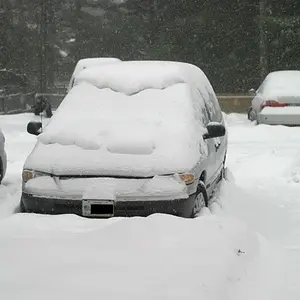
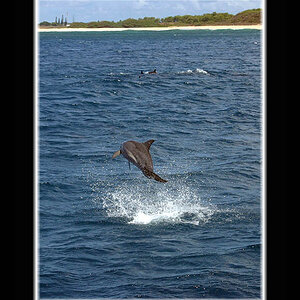
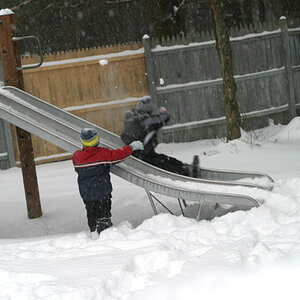
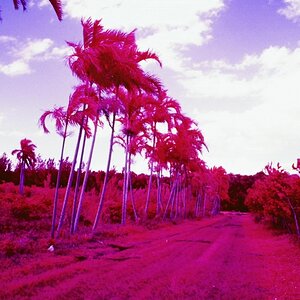
Everyone is so generous with their time and knowledge! It is so kind and appreciated! I frlly think I understand the roles that IO, aperture, and shutter play in exposure as well as how a camera meters. With these given photos I was actually trying to use a much faster shutter speed than I could bc I had been told for me t was a better idea. I think it resulted in underexposed and me thinking the high ISO caused noise. Mi actually tried again recently and shut at a much slower shutter and got better photos! Right now my speed light is being sent in but I have been liking my build in speed light that I use as full flash but dull down. It's not perfect and I still can't bounce it necessarily but t helps.

I really want to take a class and I think I'm going to try and find the time! I would love it! I also get a lot of the concepts but when I am shooting moving and active and lol uncooperative subjects like my kids, t is hard to Apply all. I'm so excited bc I have a friend who is willing to let me shoot her. It will be great practice! I do agree that a lot of these people on this forum are by far way more experienced and proffessional! It is actually such a science. I am trying to self teach as muh as possible.

Again thanks for all the great info! Oh btw can u guys share ur favorite pp editing techniques? :)
 
Oh btw can u guys share ur favorite pp editing techniques? :)

Mostly, I rely on a set procedure so that I can produce consistent results within each genre (look) of style that I provide.

In ACR I check and correct white balance as necessary, do capture sharpening, and after setting the white and black points I run down through the ACR Basic sliders as necessary to fine tune exposure, contrast, highlights, etc.

I then adjust the Presence sliders as necessary, and use any of the other ACR panels needed to establish the basis of my artistic goals for the image.

In Photoshop I do whatever local editing/sharpening is necessary to clean up blemishes, fine tune local exposure/contrast, and achieve the 'look' I want for that image be it in color or B&W. Quite often I take the image back to ACR for more parametic edits. I strive to do as many of my edits in 16-bit mode as possible, and leave any 8-bit mode edits for final edits.

Last steps deal with output sharpening, assigning the appropriate color profile and color space for the intended usage of the image.
 
Amoment, there is a huge difference between knowing something (on an intellectual level) and understanding it (on an second-nature, unconscious level). It's like playing the piano - knowing what keys to press and for how long is just the beginning, and only when the music flows without your thinking it does it reach a level of organic creation. It's called internalizing. It's doing something until it is second nature. The difference between a good photographer and a great one is that while both know the theory, only one can focus on the art without concerning himself/herself about the technicalities - not because they are not important, but because they are internalized to the subconscious level. I've shot alongside some very accomplished photographers, and they just don't fuss with the equipment - it is an extension of them, just as their index fingers are.


Part of the trick to internalizing, is to do the same exercise over and over until it is second nature. You tend to jump from one topic to another. I suggest you focus on one technique at a time, and work on it until it is second nature. Then move on to the next one, returning to blend the two once the second one also becomes second nature. and so on. But the key is practice. When I teach students some new technique, I try to use the cycle of Plan-Do-Measure-Adjust. "Plan" is the concept, the vision, the intent. "Do" is the actual carrying out of the process. "Measure" is checking how close to your original plan/vision/intent you were able to get. "Adjust" is determining what change(s) you need to make to bring yourself closer to your goal. Next cycle of Plan-Do-Measure-Adjust . And again. Once the "Adjust" part becomes effectively zero, it's time to do it until everything is accomplished at a subconscious level. That is not a trivial effort. It takes time and dedication. What you want to do is to train your muscles to accept the camera as an extension of themselves.
 

Create an account or login to comment

You must be a member in order to leave a comment

Create account

Create an account on our community. It's easy!

Log in

Already have an account? Log in here.

New Topics

Back
Top Bottom