What's new

Maximum amount magnification possible?

hamlet

No longer a newbie, moving up!
Joined
Sep 12, 2013
Messages
2,894
Reaction score
435
Location
Belgium
Can others edit my Photos
Photos OK to edit
I've been messing around with duct tape and a few lenses here and there in order to see how much i could magnify something with my lenses, and i've been wondering how much magnification someone could theoretically achieve with their dslr? Is it 9:1? 10:1? or even 20:1? Is there a limit and how do you think you could get there?
 
I'm gonna do that at some point actually. But i'm asking about dslr lenses and little extras to make the camera itself able to magnify things. Some people use extension tubes and others use lens adapters to use two lenses to magnify stuff, i'm just wondering how far people have been able to push this little pony.
 
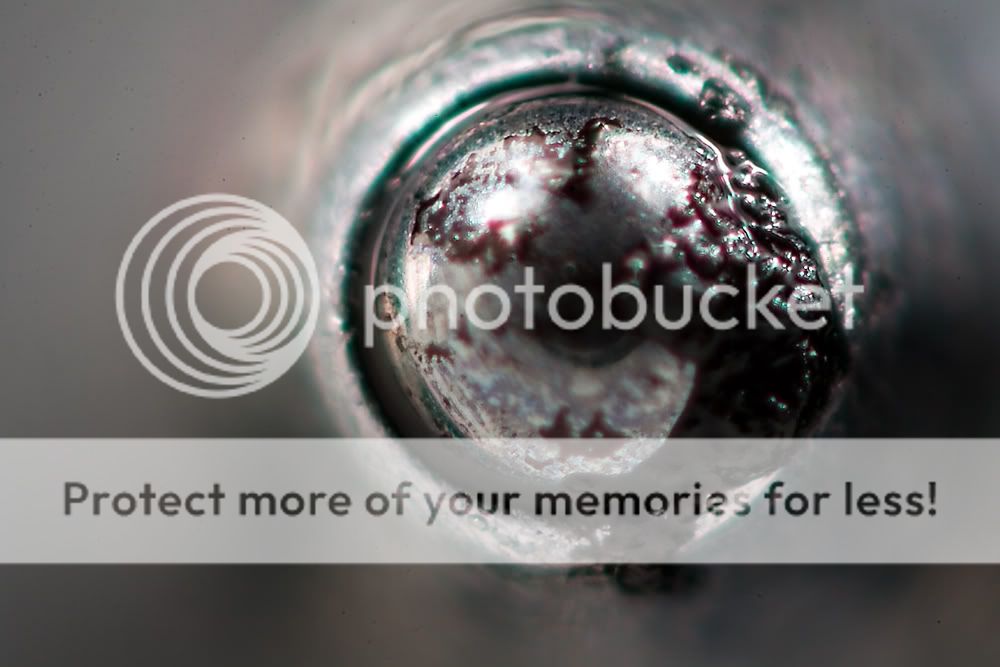
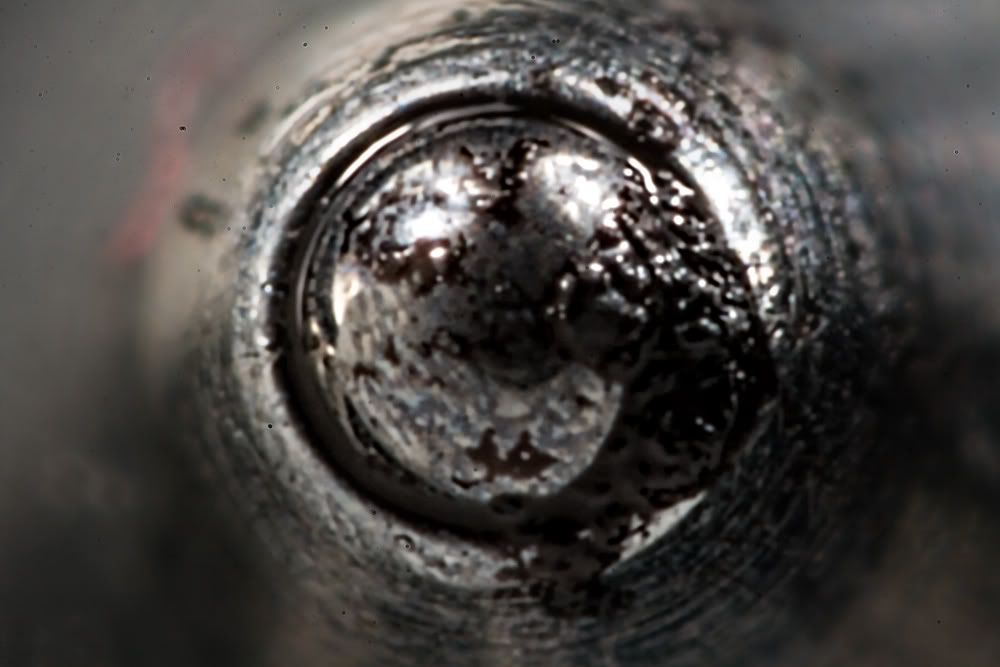
I once did some insane shots of a ball point pen by hooking everything I had up at once. The thing is most methods are hampered by practicality;

1) Teleconverters - you lose a lot of light each time you add one, plus whilst they are highly corrected optics adding each one adds a lot of glass each time so you end up losing more and more optical quality.

2) Extension tubes - these very quickly become unworkable. Not only does their length end up putting more strain on the mounts (because you've got a DSLR one end and a heavy lens the other) but also the long length makes it much harder to work with - same is true of stacking bellows units.

2) Close up lens attachments/diopters are potentially the best approach as you can get higher increases in magnification with less optics than a teleconverter. However the downside is that, like extension tubes, the more power you add the closer your point of focus gets - eventually you can't increase it any more without the point of focus moving inside the lens.

In most practical terms 3:1 is oft what most need - 5:1 is getting extreme and anything beyond that gets much much harder to focus, hold steady and light to get a good shot.


Practically speaking you can probably go higher if you've a very solid tripod setup. 10:1 is possible (MP65mm macro with 2*TC) and you can go higher still but it gets hard. It's also important to realise that the higher your magnification goes then typically the smaller the aperture becomes, this then means that diffraction becomes a much bigger issue. The MPE 65mm macro at 5:1 is oft used at f5.6 because to go any smaller the effective aperture (which is already much smaller than f5.6) causes significant sharpness loss from diffraction.

I forget what this magnification was but it was lots these are the full shots, no cropping from a crop sensor Canon DSLR

IMG_0274.jpg


IMG_0280.jpg
 
Some ifs involved, but it could be a discussion only about enlarging the image, or it could be about enlarging the original subject. If we used a macro lens at 1:1, it could be the same thing.

The camera sensor has specs, like perhaps 4928x3264 pixels (16 mp) on a 23.6x15.6 mm sensor. Plug in your own numbers, but that's 4928/23.6 = 209 pixels/mm, or 5304 pixels/inch.

If we could settle for printing/viewing at say 100 pixels/inch, that's 53x enlargement. Very much larger, and we start mostly seeing pixels.
 
I once did some insane shots of a ball point pen by hooking everything I had up at once. The thing is most methods are hampered by practicality;

1) Teleconverters - you lose a lot of light each time you add one, plus whilst they are highly corrected optics adding each one adds a lot of glass each time so you end up losing more and more optical quality.

2) Extension tubes - these very quickly become unworkable. Not only does their length end up putting more strain on the mounts (because you've got a DSLR one end and a heavy lens the other) but also the long length makes it much harder to work with - same is true of stacking bellows units.

2) Close up lens attachments/diopters are potentially the best approach as you can get higher increases in magnification with less optics than a teleconverter. However the downside is that, like extension tubes, the more power you add the closer your point of focus gets - eventually you can't increase it any more without the point of focus moving inside the lens.

In most practical terms 3:1 is oft what most need - 5:1 is getting extreme and anything beyond that gets much much harder to focus, hold steady and light to get a good shot.


Practically speaking you can probably go higher if you've a very solid tripod setup. 10:1 is possible (MP65mm macro with 2*TC) and you can go higher still but it gets hard. It's also important to realise that the higher your magnification goes then typically the smaller the aperture becomes, this then means that diffraction becomes a much bigger issue. The MPE 65mm macro at 5:1 is oft used at f5.6 because to go any smaller the effective aperture (which is already much smaller than f5.6) causes significant sharpness loss from diffraction.

I forget what this magnification was but it was lots these are the full shots, no cropping from a crop sensor Canon DSLR

IMG_0274.jpg


IMG_0280.jpg

I noticed that focusing was much, much harder. Thank you for that wonderful post i learned some more today about macro photography, those are some lovely pictures.
 
Magnify? Not really.

Magnify and still look good? Yes... definitely.

You'll want to look up a few topics...

Diffraction limits and diffraction limited photography.
The "Airy Disk" and/or "Airy Pattern"
and
Dawes' Limit

All three are somewhat related and have to do with the wave nature of light. Light doesn't technically travel in a perfectly straight beam... it's a wave. And it have wave-like characteristics when you really magnify it. So you CAN keep magnifying but there's a point where what you're magnifying is really just a blur. The theory around this is based on an assumption of perfect optics -- so it's not actually a question of having good enough gear. It'll happen regardless of how good your lenses are.
 

Create an account or login to comment

You must be a member in order to leave a comment

Create account

Create an account on our community. It's easy!

Log in

Already have an account? Log in here.

Back
Top Bottom