Here are some thoughts about creating images that others will want to look at.
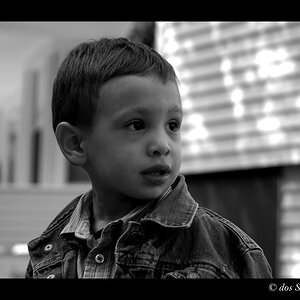
Human vision tends to focus on specific things. If there's a face, then the eyes tend to be the "attractors". Otherwise, it's the brightest part of the image, or the sharpest. Once the eye "enters" the image, it tends to do a quick scan and the scan tends to follow lines, or curves. If the "attractor" is at the edge of an image, it tends to move to the center. If there is a person, we tend to follow their gaze. If it's a moving object, we tend to follow its direction. If the image has a strong pattern, then our eyes are sensitive to disruptions of pattern. And at times, we can see patterns where there are none.
So a good photographer arranges the elements in the image so that the viewer can interact with the image. Placement of the initial "attractor" sets up the starting point for the eye travel, which then follow the curves or lines, or implied directions, to see the other elements in the image.
At the same time, the photographer should try to minimize or eliminate distractions which pull the eye away from the intended path. These include things such as zone of brightness or sharpness that are more than the intended "attractor". So backgrounds that are too bright or too distinct can do this. So can the inclusion of elements that does not advance the "storyline" of the image. On the other hand, inclusion of enough background or foreground can be a good thing if it provides supporting context for the image.
As an exercise in seeing, try to track what you look at when you look at an image. Where does your eye start? Where does it go? What elements did you notice? This is especially useful if you come across an image that affects you emotionally what was it that "got" you? From this analysis, you'll have a better idea of how to structure your images to get viewer interest.
Lew, who I quote in my signature, said much the same, in a more succint manner.



![[No title]](/data/xfmg/thumbnail/36/36300-760519cb9a8ebbfc57cc3d1fda5dd37c.jpg?1734168623)
![[No title]](/data/xfmg/thumbnail/42/42472-9229a7111196e5db141ab82c04a4ba48.jpg?1734177002)



![[No title]](/data/xfmg/thumbnail/35/35270-a66987e049fb56c03e604b4c77910b81.jpg?1734166934)