What's new

Nikon 55~200 AFS

Do i need AF-D or AF-S? I thought AF-d was better? Sorry im really bad with all this.
AF-D lenses might be considered "better" in sharpness, but they are older lenses that do not contain the focusing motor in the lens. Your camera does not contain a focusing motor in the body, and therefore the AF-D lenses must always be focused manually. The AF-S lenses are the ones you want because they have the focusing motor in the lens. Each lens that is marked "S" has the motor in it.
 
you're shooting in a studio setting, exp. comp. should be zero. adjust camera settings/lighting power accordingly.


i think this is about the time i gracefully exit this mess.
 
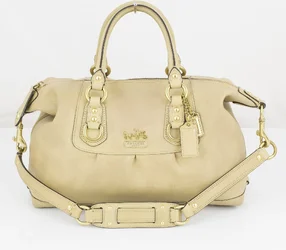
I need to stand back ...bags do not look natural if you shoot them close, normally i stand back 6-10 feet
This is why I suggested a 100mm lens at the shortest, and you can use the 55-200 lens set to 100mm for the same effect.
 
A 60mm lens should put you at around 4 to 7 feet for a bag without the strap up and a bit further back if the strap is up (when used on a crop sensor body).

This also helps in that you are not so far away to make adjustments to the bag, lighting, etc.

The +2 is probably about right on the exposure compensation if you are in Matrix metering. Makes up for the meter reading the light background and trying to make it grey. You can also spot meter on the subject and then adjust depending on its reflectance. It might help to have some lighting on the background if you are looking to make that white without having to touch up in PS.

I might add a couple panels on the camera side of the bare lights and could move the soft boxes in closer. You could also have a light above the light box.
 
Thanks we are slowly getting there. Yes i'm using matrix. I will try spot metering, never tried that.
Yes I will move lights in closer, and add more light above...thank you for helping
 
try using your CFL lightbulbs sideways too
since they are longer on the sides than the front, I believe they emit more light from the sides than the front, which blocks all the circular tubes behind.

CFLs are not "spot lights" directing all light forward. They simply scatter the light every which way. So position them accordingly for best light emission.
 
try using your CFL lightbulbs sideways too
since they are longer on the sides than the front, I believe they emit more light from the sides than the front, which blocks all the circular tubes behind.

CFLs are not "spot lights" directing all light forward. They simply scatter the light every which way. So position them accordingly for best light emission.

Thanks, superb piece of advice. I did not know that
 
try using your CFL lightbulbs sideways too
since they are longer on the sides than the front, I believe they emit more light from the sides than the front, which blocks all the circular tubes behind.

CFLs are not "spot lights" directing all light forward. They simply scatter the light every which way. So position them accordingly for best light emission.

Thanks, superb piece of advice. I did not know that
that's one reason they are poor for photography. They may light up a room but they don't direct the light like a spotlight (which is what flashes, strobes, and spot lights do).
 
Ok, I have the sharpness where I want it to be (it's good enough for me). These settings were shot at f/10 1/3s ISO 100 18-55@38mm. I am at +2 exposure, spot metering. The photo is probably a tad too over exposed.
I remember with the previous lens though, shooting at F22, I was getting a perfect white background? Do i need more light coming from the back?
 

Attachments

  • t10.webp
    t10.webp
    318.6 KB · Views: 98
try using your CFL lightbulbs sideways too
since they are longer on the sides than the front, I believe they emit more light from the sides than the front, which blocks all the circular tubes behind.

CFLs are not "spot lights" directing all light forward. They simply scatter the light every which way. So position them accordingly for best light emission.

Thanks, superb piece of advice. I did not know that
that's one reason they are poor for photography. They may light up a room but they don't direct the light like a spotlight (which is what flashes, strobes, and spot lights do).

I could get a couple of spot lights instead, could you please point me in a good direction. I read about lighting last night till 3 am and it's a HUGE learning curve.
Would two spot lights to the side be good to replace the fluorescents? How about one in the back? What brand of spot lights? Surely I can't buy them at home depot.
If i understand correctly the purpose of this whole operation is to give a brighter light so as to move the S value further to the right.
 
Are spot lights variable? So i can increase or decrease lights? You mean LED spot lights? I was reading about them last night, about people making videos with DSLR, but one light was $500
 
I don't really have the answer you are looking for because I don't use those type of "lights" I use speedlight/strobes with diffusers. But as you bring more light to the subject you want the light diffused, and possible multiple layers of diffusion, the less direct the better to eliminate any type of reflection.

here's a bunch of threads on product photography ==> Search Results for Query: product photography | Photography Forum


Also be aware of white balance, especially if you have a variety of light bulbs around and natural light. since you like reading This is why you first do not want to mix light (ceiling lights, outside lights with your photography lights) :)
read this first ==> Color Temperature (Kelvin)
if it makes sense then this ==> Color temperature - Wikipedia, the free encyclopedia
 
I don't really have the answer you are looking for because I don't use those type of "lights" I use speedlight/strobes with diffusers. But as you bring more light to the subject you want the light diffused, and possible multiple layers of diffusion, the less direct the better to eliminate any type of reflection.

here's a bunch of threads on product photography ==> Search Results for Query: product photography | Photography Forum


Also be aware of white balance, especially if you have a variety of light bulbs around and natural light. since you like reading This is why you first do not want to mix light (ceiling lights, outside lights with your photography lights) :)
read this first ==> Color Temperature (Kelvin)
if it makes sense then this ==> Color temperature - Wikipedia, the free encyclopedia

Yes I am aware of the same white daylight bulbs must be used. I will read up on it. Probably end up buying some strobes. Thanks for your help
 
I have just made a major discovery. If i photograph the bag really closely let's say 2 feet away, the bag is razor sharp at 48mm f/11 0.50s. Nearly too sharp, not natural.
If i move the tripod back at 6 feet let's say, (i'm still at 48mm) the bag looks smaller in the viewfinder, but the shot I take is no where near as razor sharp. In other words shots are less sharp when taken at a greater distance on the same settings? Maybe at a distance there is less light? so shots are less focused?
Also, on an 18mm-55 which the sharpest mm ?
 
I have just made a major discovery. If i photograph the bag really closely let's say 2 feet away, the bag is razor sharp at 48mm f/11 0.50s. Nearly too sharp, not natural.
If i move the tripod back at 6 feet let's say, (i'm still at 48mm) the bag looks smaller in the viewfinder, but the shot I take is no where near as razor sharp. In other words shots are less sharp when taken at a greater distance on the same settings? Maybe at a distance there is less light? so shots are less focused?
Also, on an 18mm-55 which the sharpest mm ?
Yes you are correct.
Your lens is fuzzy, it lacks detail when cropped.
It's soft all the way through the focal ranges.
From past ppl the 18-55 is better.
But these lenses are bottom of the barrel Nikon consumer lenses.

Plus if you take an image taking up the entire sensor the image will have more pixels in the image, it will look sharper because you don't have to blow it up too much to see detail. It will be more sharp then an image 1/4 it's size which has to be cropped to make the same size. This is the reason ppl use larger focal length lenses, and better quality lenses.

But your 55-200 is a soft lens (loses detail through all ranges) at 200, so it doesn't really matter. It's sharpness will never compare to a 70-200 at 200mm (at any focal length), or a 200mm prime lens.

It's like looking through a pair of $300 lens eyeglasses, then hoping to get the same clear & crisp vision quality from some cheap $10 glasses at the pharmacy.

In the end if you are photographing these for the internet your image is going to be much smaller in order to have good screen drawing speed. And you'll loose the details anyways.

btw, I think your IQ expectations of your lenses are far beyond their capability.

 
Last edited:

Create an account or login to comment

You must be a member in order to leave a comment

Create account

Create an account on our community. It's easy!

Log in

Already have an account? Log in here.

New Topics

Back
Top Bottom