What's new

The Coffee House

I'm thinking Gary is touching on an aspect of photography that is important. To make it "easy", the equipment makers took much of the thinking out of the process. We don't have to worry our little minds about the technical aspects (exposure, focus, etc), and concentrate (if we concentrate at all) on the composition. But because it's so easy to press the shutter, we're really not benefiting from the thinking that used to be required to make a decent image. Medium format puts enough obstacles into the process to require some planning and thought. It takes a lot more effort to take a snapshot with a medium format film camera, so it becomes almost necessary to put some work in to make the image worthy of the effort.

I've more or less forced myself to take almost all my images on a tripod, mainly because it forces me to slow down and actually think about what I want the image to show. Obviously, this doesn't work for street and casual shooting, but for much of what I do, it's a contributor to good habits.
 
Buenos Dias Coffee Hosers. I, like Leo, slept in. It's 8:24 a.m. right now and 50F, chilly for here. I'm having my first sips of Colombian Supremo, steaming away in my Christmas mug. Life is good. Today I hope to finish installing my skimmer filter. I dug out about 1/3 of the hole yesterday, kept running into roots. I just worked around them yesterday, today I'll cut them and get to work in earnest.
 
It really slows things down, makes you take a really hard look at what you're about to take. It was fun to hear people talk about the "professional camera" and "Medium format".

Had you never shot medium format before, Gary?

Funny, I just had a dream last night about tilt lenses :D
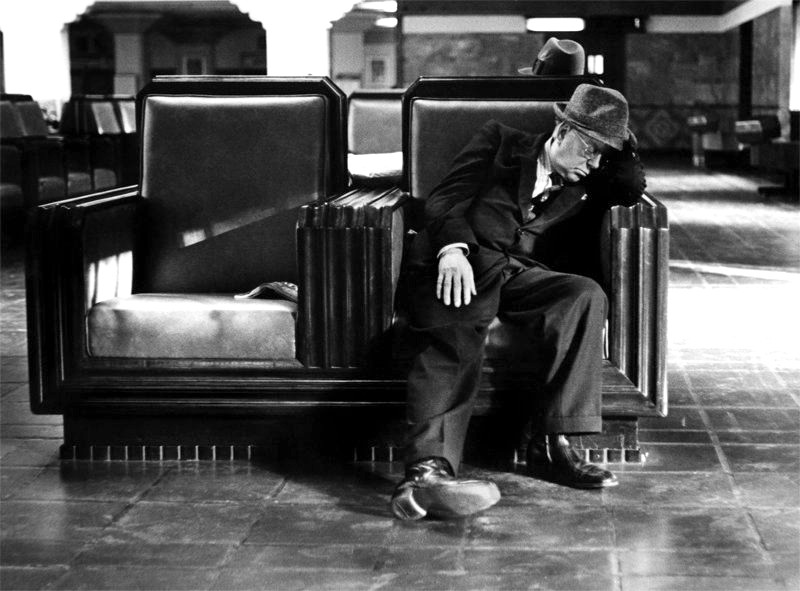
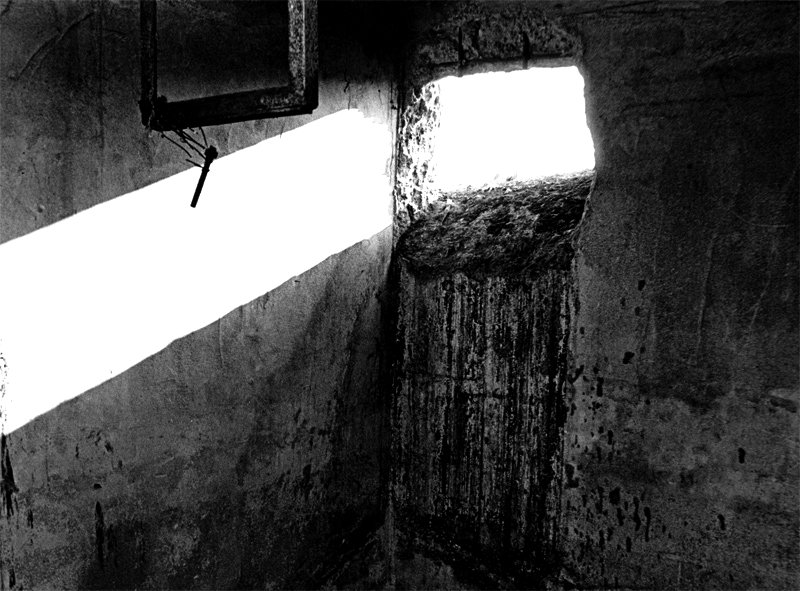
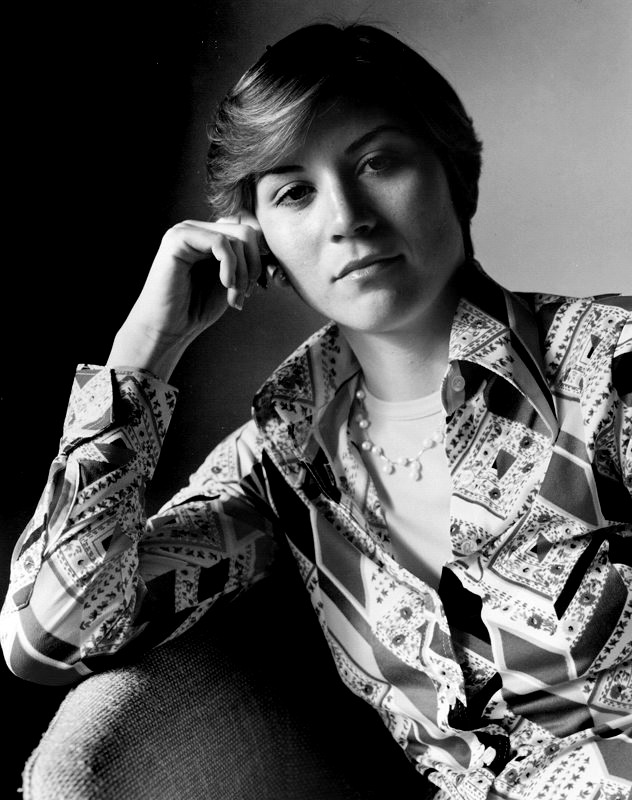
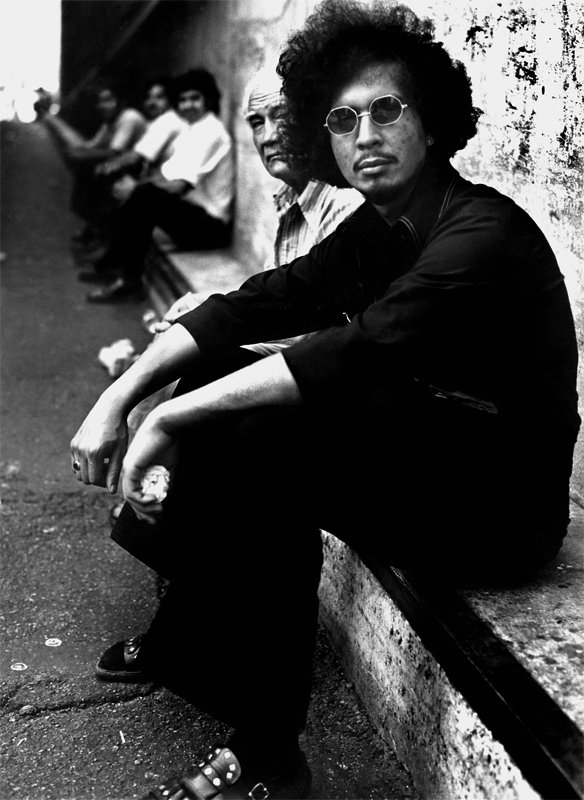
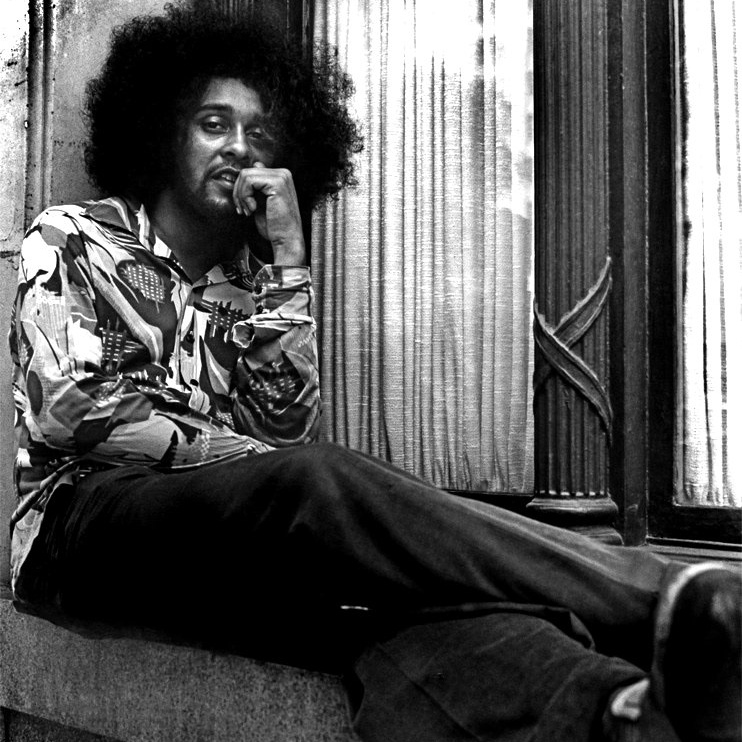
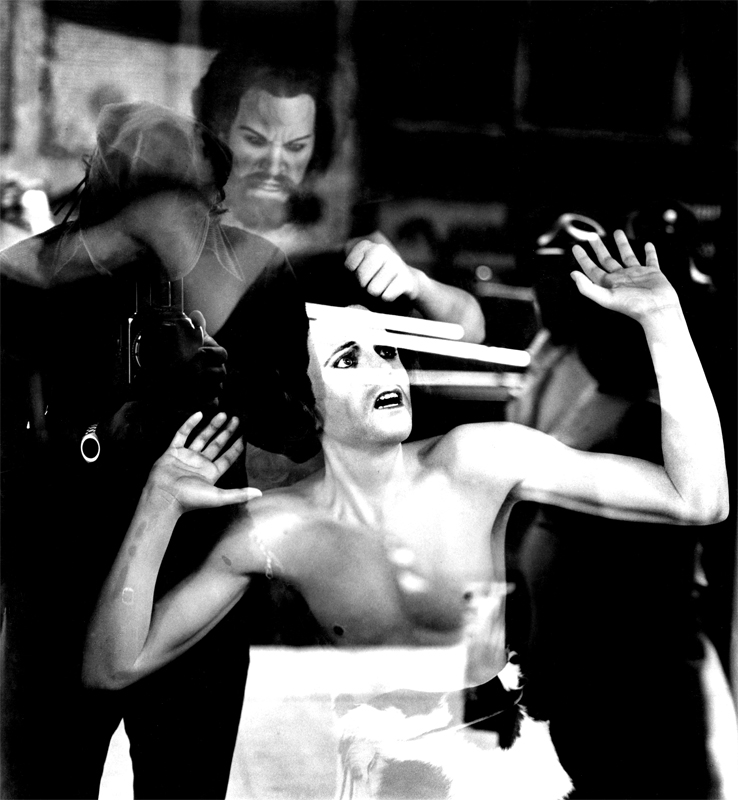
Yeah, I had a Hasselblad. But the Hasselblad is significantly smaller. I used to handhold the Hasselblad most of the time. No way with this ten pound beast. (Actually, I'm thinking of taking the 680 into the street, but after I get a bit more proficient.) Here are some handheld Hasselblad snaps:

#1
Citrus-Picker-UE.jpg


#2
Union-Station-UE.jpg


#3
Light-Shaft-UE.jpg


#4
A%20shirt.jpg


#5
On%20Broadway-11%20-%20HP.jpg


#6
On-Broadway-13-UE.jpg


#7
Self-Portrait-2%20-%20W.jpg

Moi and my 500 C/M.
 
I'm thinking Gary is touching on an aspect of photography that is important. To make it "easy", the equipment makers took much of the thinking out of the process. We don't have to worry our little minds about the technical aspects (exposure, focus, etc), and concentrate (if we concentrate at all) on the composition. But because it's so easy to press the shutter, we're really not benefiting from the thinking that used to be required to make a decent image. Medium format puts enough obstacles into the process to require some planning and thought. It takes a lot more effort to take a snapshot with a medium format film camera, so it becomes almost necessary to put some work in to make the image worthy of the effort.

I've more or less forced myself to take almost all my images on a tripod, mainly because it forces me to slow down and actually think about what I want the image to show. Obviously, this doesn't work for street and casual shooting, but for much of what I do, it's a contributor to good habits.

In the last year or two, I've moved away from dSLR's and exploring different camera formats and camera systems. I stumbled upon the Fuji P-Pro1. It was such a sexy looking camera. It was great to hold and great to look at ... so I purchased it on a whim. When I walked out the store I felt like I was back in college dating the cutest cheerleader on campus. After shooting the XP1 it dawned on me that this cheerleader had brains and personality too. The Fujinon lenses are, at a minimum, equal to my 'L' lenses. The IQ coming out of the X-Trans sensor was different, much closer to film than my MFT and even closer than my FF sensors. But, (the big but), the camera was slow. It did everything slow, it focused slow ... it wrote to the card slow ... that fraction of a second of molasses was like night and day in how I shot. My 1D's and EM5/1's were very fast, lightning fast and I could shoot in nearly a reactionary style. I see something and boom-boom-boom ... I got it. The XP1 was too slow for that way of shooting. I had to re-educate my way of thinking and shooting back to my film days. Now I have to shoot in an anticipatory methodology. I have to see the shoot before it happens, I have to get into position with enough time to focus and wait for the peak of action ... then boom. All that re-education was painful, but it sharpened my old skills of previsualization and made me less wasteful. (Having unlimited and free film in my youth made me a very wasteful photographer.)

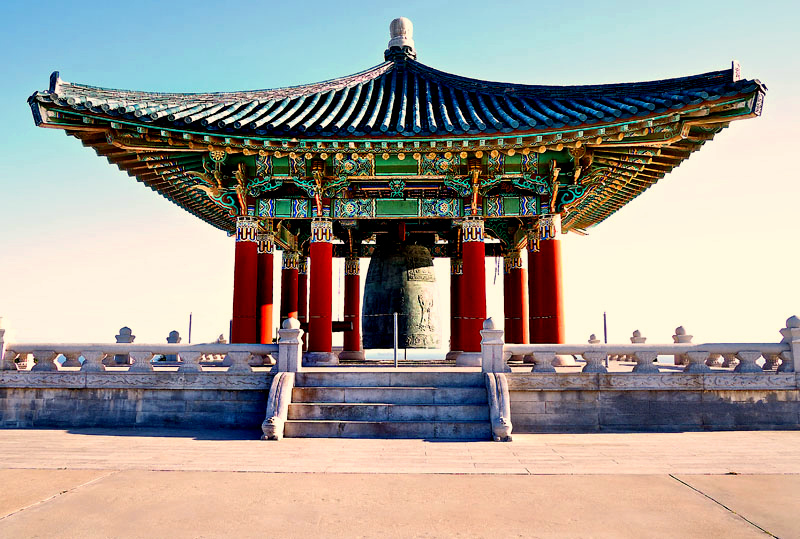
Shooting with the XP1 has been very helpful in preparing me for the 680III. I was still wasteful, instead of waiting for people to clear out at the Korean Bell, I took some shots knowing I can clean it up in PhotoShop. And I was not very selective down at Royal Palms shooting the waves crashing against the rocky outcroppings. I still need to learn patience. Maybe next time.

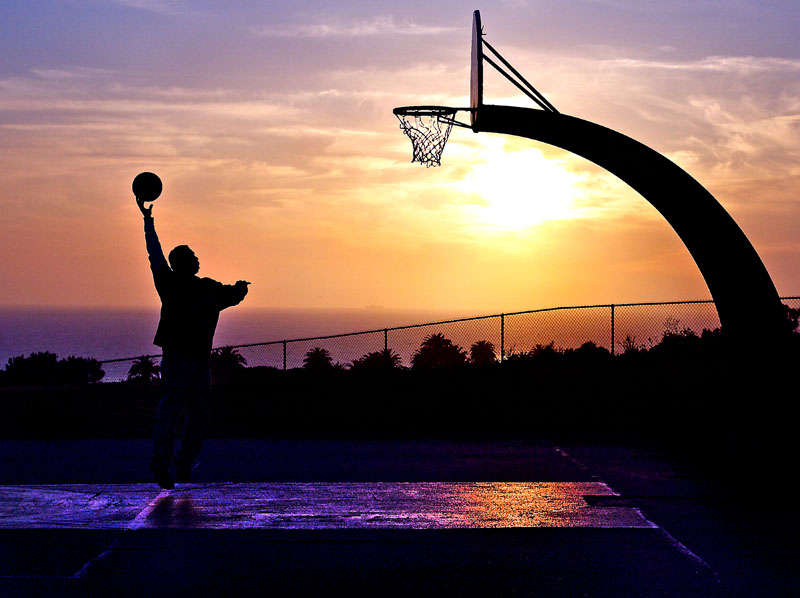
The sites I shot with the Fujifilm 680III:

_1090338.jpg

The Korean Bell (Panasonic GF1)

_1090417.jpg

Basketball at the Korean Bell - arguable the best basketball court in the world, lol. (Panasonic GF1)

_1090407.jpg

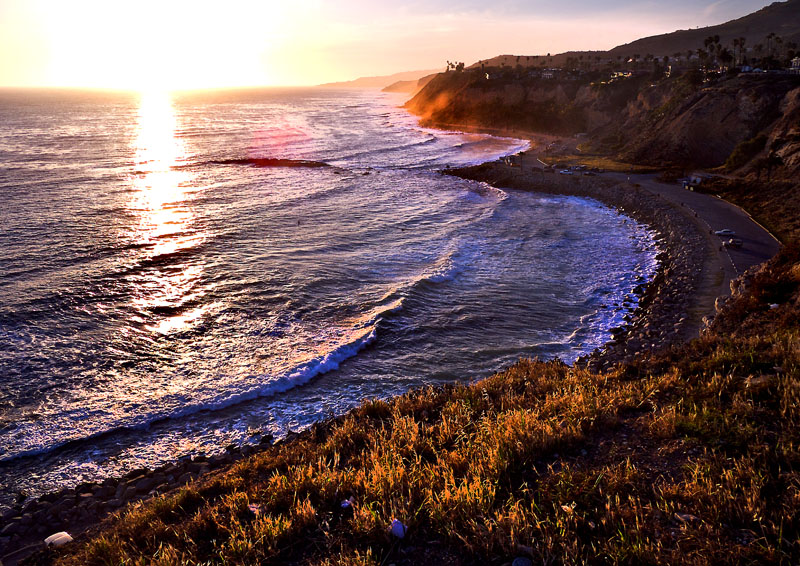
The Royal Palms Cove (Panasonic GF1)
 
I had to re-educate my way of thinking and shooting back to my film days. Now I have to shoot in an anticipatory methodology. I have to see the shoot before it happens, I have to get into position with enough time to focus and wait for the peak of action

Isn't THAT the skill of photography? Any dam fool can point the camera and press the shutter. To see an image before it happens, to put yourself in the proper place, to set the camera up to capture your vision... those are skills that require practice, and experience.

However, in many ways those processes are the same that make for good drivers, and good tradespeople, and safe workers: be aware of the surroundings and context, anticipate the actions of those around you, and the things THEY will react to, and place yourself where the proper result will be achieved.
 
I'm thinking Gary is touching on an aspect of photography that is important. To make it "easy", the equipment makers took much of the thinking out of the process. We don't have to worry our little minds about the technical aspects (exposure, focus, etc), and concentrate (if we concentrate at all) on the composition. But because it's so easy to press the shutter, we're really not benefiting from the thinking that used to be required to make a decent image. Medium format puts enough obstacles into the process to require some planning and thought. It takes a lot more effort to take a snapshot with a medium format film camera, so it becomes almost necessary to put some work in to make the image worthy of the effort.

I've more or less forced myself to take almost all my images on a tripod, mainly because it forces me to slow down and actually think about what I want the image to show. Obviously, this doesn't work for street and casual shooting, but for much of what I do, it's a contributor to good habits.
cant comment on medium format but just on shooting polaroid and 35mm I knew I had less shots to play with and was more likely to make them count.
 
I had to re-educate my way of thinking and shooting back to my film days. Now I have to shoot in an anticipatory methodology. I have to see the shoot before it happens, I have to get into position with enough time to focus and wait for the peak of action

Isn't THAT the skill of photography? Any dam fool can point the camera and press the shutter. To see an image before it happens, to put yourself in the proper place, to set the camera up to capture your vision... those are skills that require practice, and experience.

However, in many ways those processes are the same that make for good drivers, and good tradespeople, and safe workers: be aware of the surroundings and context, anticipate the actions of those around you, and the things THEY will react to, and place yourself where the proper result will be achieved.
Yes and no. It depends on the genre, those skills always come to play, but in some genres they are more important than in others. In Street, for example, speed is a very valuable asset, sometimes more valuable to react than to anticipate ... more valuable to shoot than get into position ... waiting for peak of action in landscape can be tedious in landscape, usually time of day and lighting is more important than peak of action.

The are many skills of photography. Each skill's importance to a particular shot is determined by the content of the shot. Example, in most of Ansel Adams photographs, composition is a paramount factor in creating the exceptional image (yes, exposure and processing skill are fundamentally important as well, but were not addressing that end of the photographic spectrum) ... as opposed to Eddie Adams Pulitzer award winning shot of the ARVN general shooting the VC suspect in the streets of Saigon. That shot and genre, composition and lighting is of little concern, it is all about timing and the peak of action.

To an Ansel Adams type of photographer, shooting Street is more of "any damn [sic] fool can point the camera and press the shutter" ... and vice versa, ad infinitum between genres.

You made a general remark, which I actually do agree with, but the degree of importance to shooting in an anticipatory fashion as opposed to a reactionary fashion is dependant upon the the genre, the particular shot and the equipment being used. Even if I was using a slow camera like the XP1, I would have shot many many more images, different angles, different exposures, different lenses knowing that I can cull out the best in post. With only 12 frames per roll, I have to mentally perform all that culling before I release the shutter.
 
I had to re-educate my way of thinking and shooting back to my film days. Now I have to shoot in an anticipatory methodology. I have to see the shoot before it happens, I have to get into position with enough time to focus and wait for the peak of action

Isn't THAT the skill of photography? Any dam fool can point the camera and press the shutter. To see an image before it happens, to put yourself in the proper place, to set the camera up to capture your vision... those are skills that require practice, and experience.

However, in many ways those processes are the same that make for good drivers, and good tradespeople, and safe workers: be aware of the surroundings and context, anticipate the actions of those around you, and the things THEY will react to, and place yourself where the proper result will be achieved.
Yes and no. It depends on the genre, those skills always come to play, but in some genres they are more important than in others. In Street, for example, speed is a very valuable asset, sometimes more valuable to react than to anticipate ... more valuable to shoot than get into position ... waiting for peak of action in landscape can be tedious in landscape, usually time of day and lighting is more important than peak of action.

The are many skills of photography. Each skill's importance to a particular shot is determined by the content of the shot. Example, in most of Ansel Adams photographs, composition is a paramount factor in creating the exceptional image (yes, exposure and processing skill are fundamentally important as well, but were not addressing that end of the photographic spectrum) ... as opposed to Eddie Adams Pulitzer award winning shot of the ARVN general shooting the VC suspect in the streets of Saigon. That shot and genre, composition and lighting is of little concern, it is all about timing and the peak of action.

To an Ansel Adams type of photographer, shooting Street is more of "any damn [sic] fool can point the camera and press the shutter" ... and vice versa, ad infinitum between genres.

You made a general remark, which I actually do agree with, but the degree of importance to shooting in an anticipatory fashion as opposed to a reactionary fashion is dependant upon the the genre, the particular shot and the equipment being used. Even if I was using a slow camera like the XP1, I would have shot many many more images, different angles, different exposures, different lenses knowing that I can cull out the best in post. With only 12 frames per roll, I have to mentally perform all that culling before I release the shutter.
never even developed my own film accept for in class. I do kind of miss film though even dropping it off to get developed. I don't miss the cost and limitations. But in a weird way the excitement of going to pick it up and the happiness of what came out and the dismay of what didn't I kind of miss. My images are much better now, but digital isn't the same as using my old cheap Kodak or land camera. They don't seem worth anything even though they are mostly higher quality and I have lots more of them. I still have negatives kicking around from before, not many though as over the years they seemed to have gotten lost. i think eventually i will start shooting film again too, money prevailing shooting film costs a lot more. Part of it could be a mental thing too. i have trouble taking digital as serious.
 
I agree that film has slowed me down and made me think each image through. I intentionally limit myself when shooting digital now. It's definitely had an impact on how I shoot.

Someone told me yesterday that shooting film is for wannabe hipsters. Considering most of the most expensive shots ever sold are shot on film, I think he's an idiot.
 
I had to re-educate my way of thinking and shooting back to my film days. Now I have to shoot in an anticipatory methodology. I have to see the shoot before it happens, I have to get into position with enough time to focus and wait for the peak of action

Isn't THAT the skill of photography? Any dam fool can point the camera and press the shutter. To see an image before it happens, to put yourself in the proper place, to set the camera up to capture your vision... those are skills that require practice, and experience.

However, in many ways those processes are the same that make for good drivers, and good tradespeople, and safe workers: be aware of the surroundings and context, anticipate the actions of those around you, and the things THEY will react to, and place yourself where the proper result will be achieved.
Yes and no. It depends on the genre, those skills always come to play, but in some genres they are more important than in others. In Street, for example, speed is a very valuable asset, sometimes more valuable to react than to anticipate ... more valuable to shoot than get into position ... waiting for peak of action in landscape can be tedious in landscape, usually time of day and lighting is more important than peak of action.

The are many skills of photography. Each skill's importance to a particular shot is determined by the content of the shot. Example, in most of Ansel Adams photographs, composition is a paramount factor in creating the exceptional image (yes, exposure and processing skill are fundamentally important as well, but were not addressing that end of the photographic spectrum) ... as opposed to Eddie Adams Pulitzer award winning shot of the ARVN general shooting the VC suspect in the streets of Saigon. That shot and genre, composition and lighting is of little concern, it is all about timing and the peak of action.

To an Ansel Adams type of photographer, shooting Street is more of "any damn [sic] fool can point the camera and press the shutter" ... and vice versa, ad infinitum between genres.

You made a general remark, which I actually do agree with, but the degree of importance to shooting in an anticipatory fashion as opposed to a reactionary fashion is dependant upon the the genre, the particular shot and the equipment being used. Even if I was using a slow camera like the XP1, I would have shot many many more images, different angles, different exposures, different lenses knowing that I can cull out the best in post. With only 12 frames per roll, I have to mentally perform all that culling before I release the shutter.

I "used to" think that street shooting is mostly reactionary, but a very good street shooter explained to me the amount of preparation he did/does to make his images work. He'd scout out an area, see where the shadows were, see the kind of people and patterns that were there, figure out where he'd have to be to get the right background, then wait for the opportunity to show up. Another photographer whose work is featured almost daily in our local papers told me that despite the appearance that his shots are "grab shots", there's quite a bit of planning that he does between the time he learns about an "event", and when he gets to shoot it. The "event" could be an accident, a fire, a celebrity sighting, etc. You've been a press photographer, and I'm sure you didn't start thinking about what or how you would shoot only after you go to the place. To me, that was the major revelation, that even in reactive shooting situations, there's quite a bit of stuff that gets thought about prior to pressing that shutter.

I'm certainly not disagreeing with your point that each genre has its own skill set and requirements, but wanted to emphasize that anticipation, previsualization, and preparation are just as important in reactionary situations as with the ones where you have the time to set things up. I know that my own keeper rate improves when I take the time to think about the shot, what I'm trying to do, and how I intend to go about capturing it.
 
We have Sonic Drive-Ins down here. Their coffee is just so-so. But I laid in bed until after noon! Eating a SuperSonic Breakfast Burrito........ eggs, sausage, onion, tomatoes and jalapeños.


ImageUploadedByTapatalk1418589037.939260.webp


Sent from my iPhone 6+ using Tapatalk Pro
 
Excuse me, but I am not a wannabe hipster! I am a full-blown card-carrying hipster, thankyouverymuch! :801:

I shoot film because I think the process makes my own personal results more interesting. I can achieve my objective more easily with film than with digital, partly because perfect image quality is NOT one of my objectives, and partly because the limitations of the equipment and the film force me to be more creative and careful with my shots.
Plus, I like to wear fedoras and piss off people who don't like hipsters :D
 
Plus, I like to wear fedoras and piss off people who don't like hipsters :D
I don't care for ugly male hipsters -- you are neither.:586:
 
Awwww! :blush:
 

Create an account or login to comment

You must be a member in order to leave a comment

Create account

Create an account on our community. It's easy!

Log in

Already have an account? Log in here.

Back
Top Bottom