...I am sure the settings in my camera were off
Gayla
Welcome to the forum, Gayla.
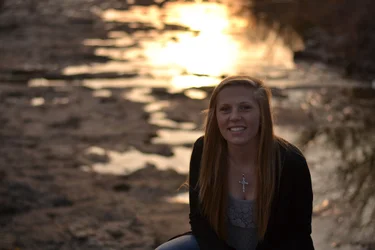
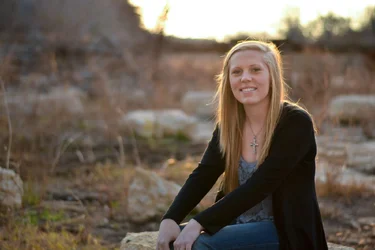
First off, what I notice about these shots is that you're trying to capture a scene with a difficult lighting situation. Much of the scene is in shadow, dimly lit, while a small portion of it is very brightly lit (the sky in the left image, the - is that snow or water? - in the second image). Digital sensors have difficulty capturing detail in such a range of lighting, you will lose detail either in the blacks of the shadows or in the blown out bright areas (or both). In all honesty, the exposure on the left looks pretty good. Your subject in the second is very dark, but to expose to make her brighter you would have had more of a blown out area above her.
Based on your camera settings (and there are many relevant ones, from which mode you shoot in to which exposure metering method you use) your camera will do its best to make assumptions to get the best average exposure.
But your camera doesn't know what it's looking at. In general it will try to average the exposure value and might not expose properly for a particular area of the frame, and that's how you arrive at photos like these. But as I said, these are difficult scenes to capture, so it's not necessarily a matter of your settings being "off" as needing to consider alternate solutions.
For example, one way to handle such a large range of lighting is to even it out over the whole frame - that is, add light to the dim areas to help balance out the bright areas. You can do this with flashes/strobes or reflectors. By brightening up the dim areas you've reduced the range the camera has to deal with and it can better properly expose for the scene. Another way would be to recompose your shot so that the bright areas are not included. For example, if the shot on the left were angled slightly differently so that there was no sky in the shot, all the camera would see is the "dim" areas and be able to properly expose for those. I do not know what camera you are using, but you may be able to set it to highlight blown out areas so you can catch them on the spot and recompose. Don't worry, handling these situations will come with time and experience (and, in some cases, more equipment).
Now, since you asked what can be done to salvage these shots in post processing, again we need to know a few things. Are you shooting in RAW or JPEG? If you shoot in RAW there is much more that can be done to salvage detail in the shadows and highlights - to a point. And the next question is what post processing software do you have at your disposal? There is a wealth of experience on this forum and many people who are good at walking you through the steps, but it's only helpful if you have the software they're familiar with.

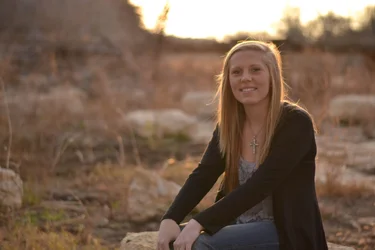


 Haven't been doing this long enough I guess! What I have found when I edit is that I often find myself trying to do "too much" or use all of the components to try to make a pic look great instead of focusing on what it needs specifically.








![[No title]](/data/xfmg/thumbnail/37/37113-886cb28b1e3fb197bdd00a9148269407.jpg?1734169831)