What's new

Does the Camera Model really matter?

I spent the weekend shooting with a humble EM10 III and a kit lens.
I loved the lightness. I got decent landscape shots but my winners were with my D810 (with a 24-70 and 70-200 both f/2.8).

A basic camera is great for learning and getting your concepts right. What I found the D810 did better was tracking moving objects, and a much much better dynamic range.
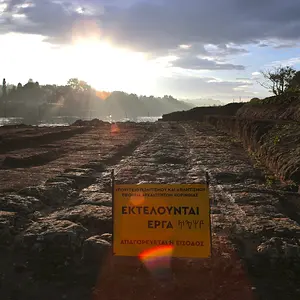
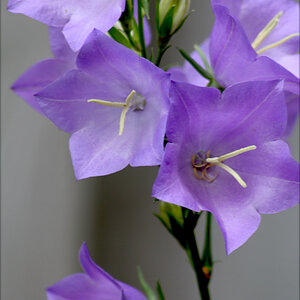
View attachment 156932

Caveat... I’m not into landscapes and I don’t have to patience to hike and be at anyplace further than a 15min trundle from my car.
View attachment 156933

no idea why attachments aren't working
 
Last edited:
IMG_2564.webp

P4220863.webp
 
Not getting into professional photography but still feel something for it. Got a Nikon D3200 with basic 18-55 kit lens. Just wanted to know if its perfect for Landscape shots or if I need to upgrade the lenses. As I said, not into professional photography but just one of the hobbies. Being a traveler a great portfolio of photos is a plus.

Most of photography is about having a good eye the rest is skill and software.
 
Watch out, that dinosaur is going to get ya!
 
Now that I have good equipment I am harder on myself because I can't blame it on the camera or lens anymore. That said, there were some shots that were simply not possible with an f 5.6 lens on a consumer grade APS-C body. I recall the first time I took the full frame with the f2.8 70-200 to an outdoor night sporting event; I was ecstatic with the possibilities that lay ahead.

But, in most conditions, a good photographer can get great results with average equipment but a poor photographer will not get good results from great equipment.

I rather see interesting pictures rather than rehashed cliches.
IMG_2551.webp

IMG_2534.webp

So I prefer to carry a basic small camera.

Planning a trip to ChiangMai later in the year. Pondering going m43 all the way.
 
Not getting into professional photography but still feel something for it. Got a Nikon D3200 with basic 18-55 kit lens. Just wanted to know if its perfect for Landscape shots or if I need to upgrade the lenses. As I said, not into professional photography but just one of the hobbies. Being a traveler a great portfolio of photos is a plus.
Your existing camera & lens are not 'perfect' for landscapes, but will be quite adequate for many Landscape shoots.
There are situations where your kit wouldn't be able to take the shot - you have the wrong focal length for some shots, others where the image may not be sharp enough for the desired output...

My own selection of hardware is more more extensive than yours, covering all relevant focal lengths on several different camera systems, but even so there are times when my kit would not be sufficient - and many more when my compositional skills would fail to get the best from a location. If I wanted a very large print (<A3) I'd probably find my lenses weren't sharp enough, or had too much CA etc. With normal output that's not normally an issue.

Experiment with what you have, if you often find you want a wider FOV than your 18-55 gives you could consider a 10-20 type lens, but if you prefer longer focal lengths that would be pretty useless to you. Likewise if you want to take scenes at dusk/night you might want a faster lens (perhaps a prime?) but for normal landscapes the gain from such a lens could be very minimal. If you want to take photos in more dramatic weather you'll probably want to change both your body & lens for a weather sealed model.

For the perfect system you could opt for a medium format camera with a range of lenses - only to find it too heavy to get to the places you want to photograph. Going the other way to a light weight system will give you other compromises, such as less dynamic range.
 
Thank you everyone for the answers. I'll try to use this combination for the best I can, and once I feel constrained by the lenses, will look for the ones that help me overcome the situation.:bouncingsmileys:
 
As usual I"m late to the party but let me add my response:
1. For landscape, your combo is fine. The next two things to add (from a landscape perspective) would be a polarizing filter (to add pop to the sky and clouds) and a rock-solid tripod (not some cheap piece of crap).

2. The posts about the photographer mattering more than the camera are spot on.

3. However, there are absolutely some kinds of photography that really benefit from specific equipment. For instance, if you're shooting wildlife (especially birds) you need a lot of FPS and a great zoom (like at least 400mm and probably more like 600mm). If you're shooting sports (especially indoors), you need really fast glass (f2.8 on a zoom lens) and a camera that doesn't give you a lot of noise when you jack the ISO to 2000 or higher. If you're shooting architecture and interiors than a tilt-shift lens is very important, a great tripod, a camera with a lot of pixels and good dynamic range. Quite simply: some genres really push the envelop in particular areas (by demanding fast lens or distance or high ISO performance or a lot of frames per second).

However, for what you're shooting, you've got a lens that will allow wide-angle compositions (critical for landscapes), has some modest zoom capabilities, and should perform well enough for everything that isn't extreme light (like the blue hour--after sunset) or extreme contrast (dark shadow in a cave as you stand outside at high noon on a cloudless day). In short, it's a solid setup for shooting landscapes and a good enough one to learn on and determine "is this good enough for me or do I need to upgrade?"

One last thought: sometimes an "upgrade" is a "downgrade." Your body is relatively small and light for a DSLR. If you "upgraded" to say...a D5 (clearly a far superior camera to what you have now), I bet you wouldn't carry it around as much (especially on hikes and walks). All DSLRs are compromises. For starting out, for landscapes (especially if they involve hikes and walks) you've got a solid setup.
 
Sometimes gear will limit you, in so far as you might not be able to realise some shots you visualise because your gear is not optimised for that particular style of shooting.

However, photography is very dynamic and usually there is a shot there..... sometimes you just need to change your mindset and look for the shots you can get. A lot of it is just learning what the limits of your gear are and then shooting within those limits. Thankfully creativeness is not a limitation that's built into gear. It's also a process that can be learned with a little time and effort.

For landscapes, a kit lens on a D3200 is absolutely fine, it's what you put in front of the lens that really counts.
 
One last thought: sometimes an "upgrade" is a "downgrade." Your body is relatively small and light for a DSLR. If you "upgraded" to say...a D5 (clearly a far superior camera to what you have now), I bet you wouldn't carry it around as much (especially on hikes and walks). All DSLRs are compromises. For starting out, for landscapes (especially if they involve hikes and walks) you've got a solid setup.

Agreed. I have a full frame but don't want to take it on business trips (size and value). I just got a T7i (with miles ironically) to take along on business travel and it is a perfect compromise. Tomorrow I leave on a trip and was trying to decide which lens to take. I've decided to take the 18-55mm EF/S in liue of the 24-105 F/4 L glass as on an APS-C the kit lens is about the same as the later is on full frame (though not the same optical quality) and much smaller.
 
Photoflyer. Perfect example of "different horses for different courses." When someone says a piece of gear is perfect, they mean perfect for what subject matter they shoot, their style and vision. Different needs for packing using a carry on vs. hauling a truck load of gear. Hence the reason I drive a truck.
 
The Camera and lens combinations is only no good when it holds you back from the majority of your shots,simple put you have out grown your camera and it just cant keep up with your demands. There limitations on all Camera gear you learn to work with them until it holds you back from the type of photography style you prefer to shoot but at the same time,there is no denying higher end gear has huge advantages like pro level glass quality,speed and handling of the camera its self menu diving vs direct access to settings etc. I have not out growing any of my gear to date but found enough annoyances from say a Nikon D3300 to move into the 7000 series of Nikon and mainly for speed and handling and nothing IQ related.
 
Last edited:

Create an account or login to comment

You must be a member in order to leave a comment

Create account

Create an account on our community. It's easy!

Log in

Already have an account? Log in here.

New Topics

Back
Top Bottom